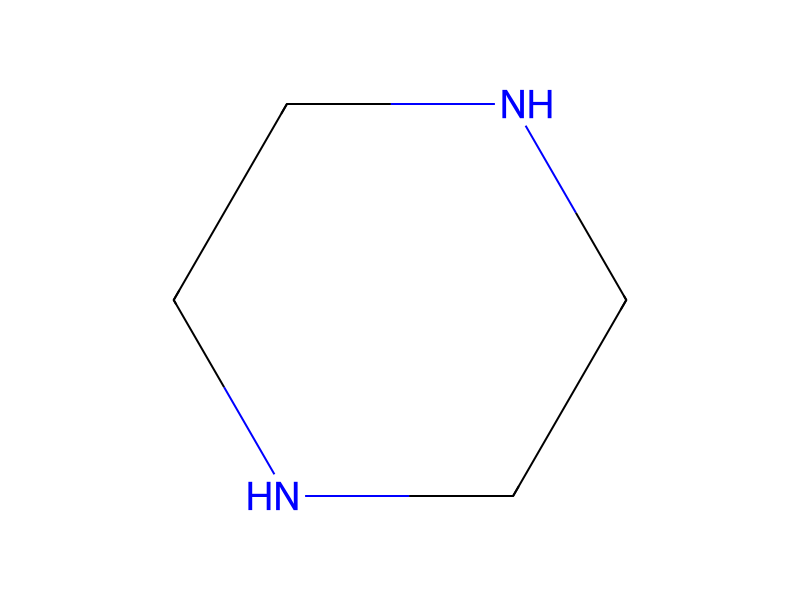
Piperazine → HCID 67504085, Verbindung
HRID 574290
Reaktionsgleichung

Cl[C:2]1[C:11]2[C:6](=[C:7]([O:12][CH2:13][C:14]3[CH:19]=[CH:18][C:17]([O:20][CH3:21])=[CH:16][CH:15]=3)[CH:8]=[CH:9][CH:10]=2)[N:5]=[CH:4][CH:3]=1.[NH:22]1[CH2:27][CH2:26][NH:25][CH2:24][CH2:23]1>C(O)(C)C>[CH3:21][O:20][C:17]1[CH:18]=[CH:19][C:14]([CH2:13][O:12][C:7]2[CH:8]=[CH:9][CH:10]=[C:11]3[C:6]=2[N:5]=[CH:4][CH:3]=[C:2]3[N:22]2[CH2:27][CH2:26][NH:25][CH2:24][CH2:23]2)=[CH:15][CH:16]=1Komponenten
4
Edukt 2

Produkt 1

Reagenzien, Katalysatoren, Lösungsmittel 1

Versuchsvorschrift
A mixture of compound 23 (4.70 g, 15.68 mmol) and piperazine (13.63 g, 158.23 mmol) in isopropanol (30 mL) was refluxed for 46 hours with stirring. Isopropanol was evaporated under vacuo and the reaction mixture was made alkaline using saturated NaHCO3 solution. The aqueous layer was extracted with CH2Cl2 (3×100 mL), dried over Na2SO4, concentrated under vacuo to afford 5.32 g (97%) of compound 24, which was used for the next reaction without further purification. 1H NMR (400 MHz, CDCl3) δ ppm 1.73 (bs, 1H), 2.80-3.44 (m, 8H), 3.80 (s, 3H), 5.36 (s, 2H), 6.82-6.94 (m, 2H), 6.99 (d, 1H, J=8 Hz), 7.23-7.35 (m, 1H), 7.44 (d, 2H, J=8.4 Hz), 7.58 (d, 1H, J=8 Hz), 8.76-8.82 (m, 1H).