2-Bromoaniline → 4-(2-Bromoanilino)-2,3-diphenyl-4-hydroxybutyrolactone
Reaktionsgleichung

[Br:1][C:2]1[CH:8]=[CH:7][CH:6]=[CH:5][C:3]=1[NH2:4].[C:9]1([C:15]2[C:16]([O:18][C:19](=[O:27])[C:20]=2[C:21]2[CH:26]=[CH:25][CH:24]=[CH:23][CH:22]=2)=[O:17])[CH:14]=[CH:13][CH:12]=[CH:11][CH:10]=1>C(Cl)Cl>[Br:1][C:2]1[CH:8]=[CH:7][CH:6]=[CH:5][C:3]=1[NH:4][C:19]1([OH:27])[O:18][C:16](=[O:17])[CH:15]([C:9]2[CH:14]=[CH:13][CH:12]=[CH:11][CH:10]=2)[CH:20]1[C:21]1[CH:26]=[CH:25][CH:24]=[CH:23][CH:22]=1Komponenten
4
Edukt 2
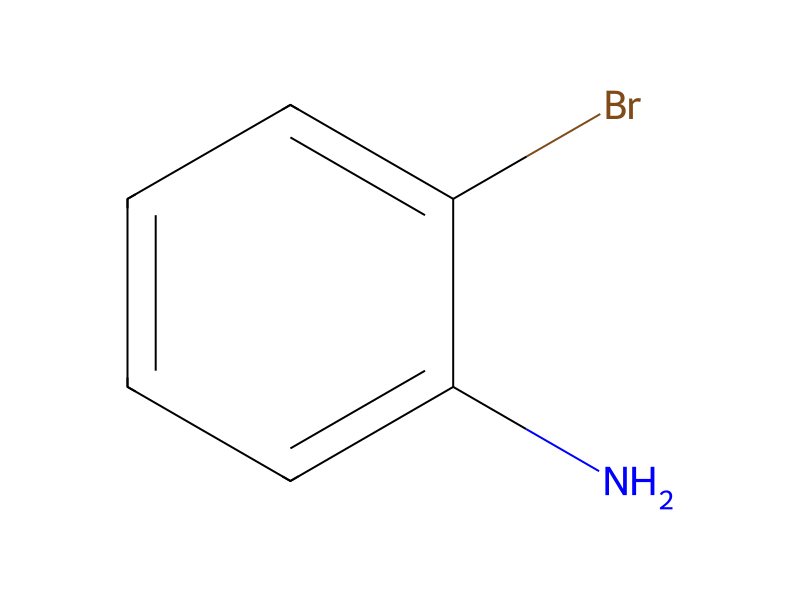

Produkt 1

Reagenzien, Katalysatoren, Lösungsmittel 1

Reaktionsbedingungen
- Temperatur
- 200 °C
Versuchsvorschrift
A mixture of 2-bromoaniline (2.18 g, 12.7 mmol) and 2,3-diphenylmaleic anhydride (3.17 g, (12.7 mmol) were stirred and heated under argon to 200° C. for 6 h. The mixture was cooled to room temperature, dissolved in CH2Cl2 (50 mL), dried (MgSO4) and evaporated. Purification of the crude product by flash chromatography on silica gel (5×25 cm column, 2 L of 3:7 hexanes/CH2Cl2, then CH2Cl2) gave first 4-(2-bromoanilino)-2,3-diphenyl-4-hydroxybutyrolactone (2.16 g, 40% yield) as a yellow solid, mp 162-164° C. and then the title compound as a bright yellow solid, mp 178-180° C., 2.00 g, 39% yield.
Aufarbeitung
- temperatureThe mixture was cooled to room temperature
- dry with materialdried (MgSO4)
- customevaporated
- customPurification of the crude product by flash chromatography on silica gel (5×25 cm column, 2 L of 3:7 hexanes/CH2Cl2
Quellen und Nachweise
- ORD-Eintrag
- ord-c40effe431974020971c577d1d017b0f
- Quelldatensatz
- uspto-grants-2005_08
- Patentnummer
- US06927227B2
Notizen zur Reaktion
Wird geladen…