Benzoic acid, 3-amino-, methyl ester → HCID 66799823, Verbindung
HRID 589718
Reaktionsgleichung

[Br:1][C:2]1[CH:3]=[CH:4][C:5]2[S:9][C:8]([S:10](Cl)(=[O:12])=[O:11])=[C:7]([CH3:14])[C:6]=2[CH:15]=1.[NH2:16][C:17]1[CH:18]=[C:19]([CH:24]=[CH:25][CH:26]=1)[C:20]([O:22][CH3:23])=[O:21]>C(Cl)Cl>[CH3:23][O:22][C:20](=[O:21])[C:19]1[CH:24]=[CH:25][CH:26]=[C:17]([NH:16][S:10]([C:8]2[S:9][C:5]3[CH:4]=[CH:3][C:2]([Br:1])=[CH:15][C:6]=3[C:7]=2[CH3:14])(=[O:12])=[O:11])[CH:18]=1Komponenten
4
Edukt 2
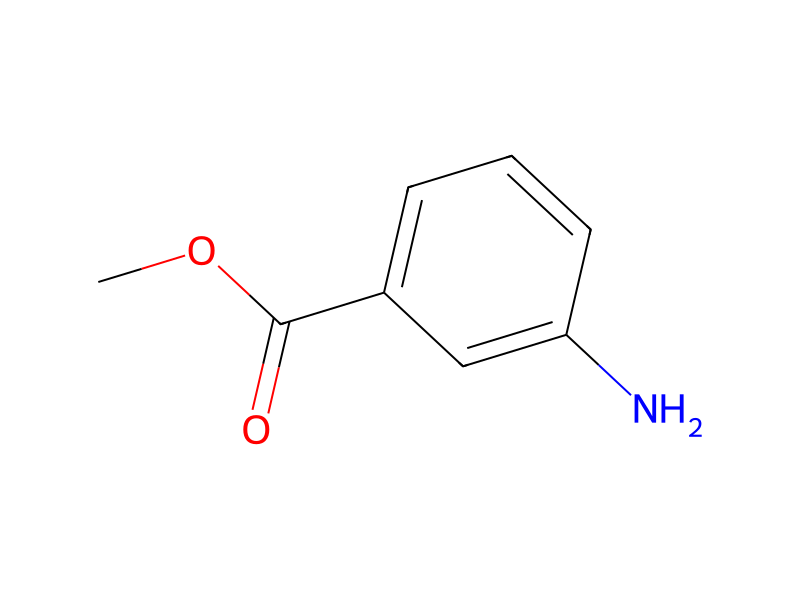

Produkt 1

Reagenzien, Katalysatoren, Lösungsmittel 1

Versuchsvorschrift
The intermediate methyl 3-{[(5-bromo-3-methyl-1-benzothiophen-2-yl)sulfonyl]amino}benzoate was prepared according to General Procedure 1, described in Example 1, starting from 5-bromo-3-methylbenzothiophene-2-sulfonyl chloride (Intermediate 10) (870 mg, 2.67 mmol) and methyl 3-aminobenzoate (367 mg, 2.43 mmol). The reaction mixture was diluted with CH2Cl2 (20 mL) and washed with 1M HCl (30 mL). The organic phase was dried (Na2SO4). Evaporation of the solvents afforded 600 mg of crude methyl-3-{[(5-bromo-3-methyl-1-benzothien-2-yl)sulfonyl]amino}benzoate, which was used without further purification.