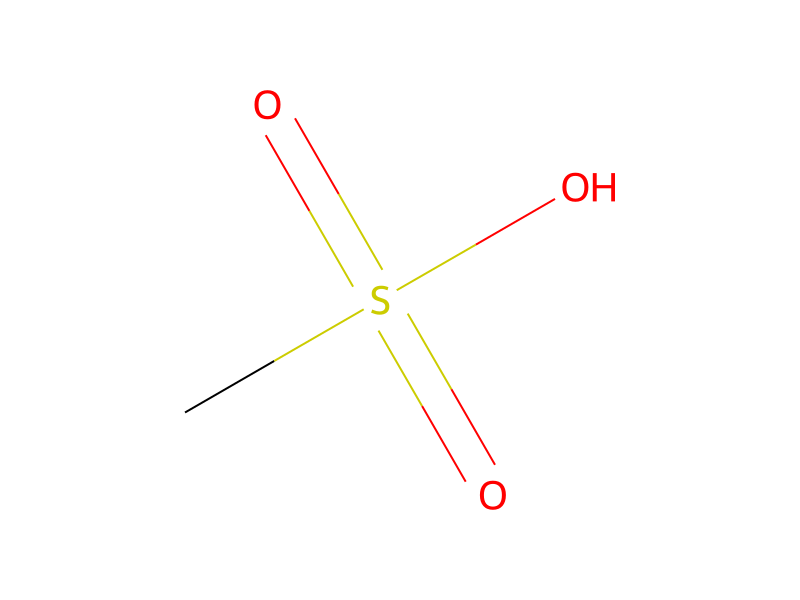
Methanesulfonic Acid → 2-(1H-pyrazol-1-yl)-9H-carbazole
HRID 591584
Reaktionsgleichung

[N:1]1([C:6]2[CH:18]=[CH:17][C:16]3[C:15]4[C:10](=[CH:11][CH:12]=[CH:13][CH:14]=4)[N:9](C4CCCCO4)[C:8]=3[CH:7]=2)[CH:5]=[CH:4][CH:3]=[N:2]1.CS(O)(=O)=O>CO>[N:1]1([C:6]2[CH:18]=[CH:17][C:16]3[C:15]4[C:10](=[CH:11][CH:12]=[CH:13][CH:14]=4)[NH:9][C:8]=3[CH:7]=2)[CH:5]=[CH:4][CH:3]=[N:2]1Komponenten
4
Edukt 2

Produkt 1

Reagenzien, Katalysatoren, Lösungsmittel 1

Versuchsvorschrift
5 mmol of 2-(1H-pyrazol-1-yl)-9-(tetrahydro-2H-pyran-2-yl)-9H-carbazole was dissolved in 100 mL of methanol before 25 mmol of methylsulfonic acid was added slowly. The solution was stirred at room temperature for 2 hours, then at 50° C. for 2 hours further. The reaction was cooled, quenched with sodium bicarbonate, and separated between dichloromethane and water. The water was washed twice with dichloromethane, the organic fractions combined and washed once with brine. The organic fraction was then dried with magnesium sulfate, filtered, and the filtrate concentrated under reduced pressure. The resulting solid was subjected to column chromatography, using silica and dichloromethane/ethyl acetate as the eluent. After concentration under reduced pressure, 2-(1H-pyrazol-1-yl)-9H-carbazole was isolated in 90% yield.