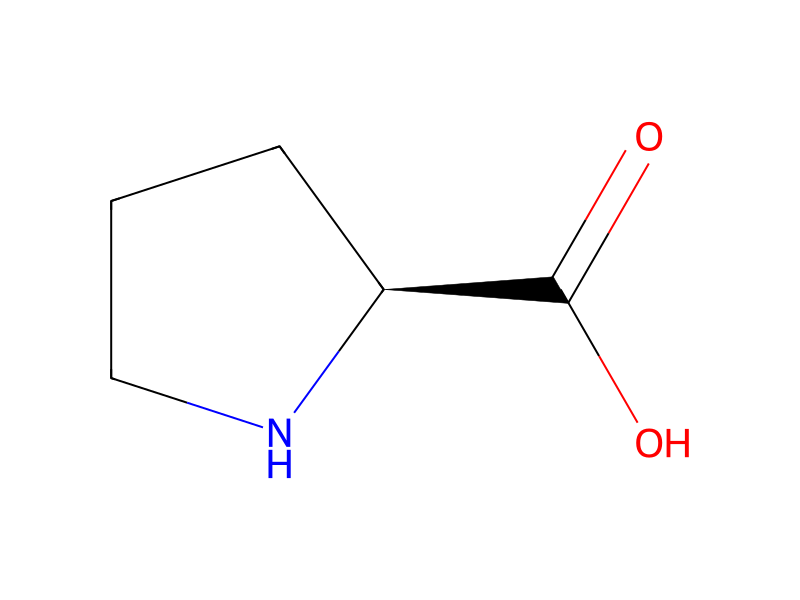
[NH2:1][C:2]1[C:7]([C:8]([O:10][CH3:11])=[O:9])=[C:6]([O:12][CH2:13][CH:14]2[CH:18]=[CH:17][CH2:16][NH:15]2)[C:5](Br)=[CH:4][CH:3]=1.N1CCC[C@H]1C(O)=O.[O-]P([O-])([O-])=O.[K+].[K+].[K+]>CS(C)=O.[Cu]I>[NH2:1][C:2]1[C:7]([C:8]([O:10][CH3:11])=[O:9])=[C:6]2[O:12][CH2:13][CH:14]3[CH:18]=[CH:17][CH2:16][N:15]3[C:5]2=[CH:4][CH:3]=1A mixture of methyl 6-amino-3-bromo-2-(2,5-dihydro-1H-pyrrol-2-ylmethoxy)-benzoate (Intermediate 18, 1.64 g), copper (I) iodide (0.095 g), L-proline (0.115 g) and potassium phosphate tribasic (2.13 g) in anhydrous DMSO (10 mL) was evacuated and purged with nitrogen then heated to 90° C., under an atmosphere of nitrogen overnight. The resultant mixture was cooled and partitioned between ethyl acetate and water. The layers were separated and the aqueous layer was extracted with more ethyl acetate. The combined organic layers were dried (MgSO4) and filtered. The filtrate was concentrated in vacuo and the residue was purified by chromatography on silica, eluting with a mixture of ethyl acetate and cyclohexane with a gradient of 10-30% to give methyl 7-amino-3a,4-dihydro-1H-benzo[b]pyrrolo[1,2-d][1,4]oxazine-6-carboxylate (0.370 g) as a brown oil.
Wird geladen…