1,4-Dioxane hydrochloride → 2-Bromo-[1,2,4]triazolo[1,5-a]pyridin-7-ylamine hydrochloride
Reaktionsgleichung

[ClH:1].O1CCOCC1.[Br:8][C:9]1[N:25]=[C:12]2[CH:13]=[C:14]([NH:17]C(=O)OC(C)(C)C)[CH:15]=[CH:16][N:11]2[N:10]=1>O1CCOCC1>[ClH:1].[Br:8][C:9]1[N:25]=[C:12]2[CH:13]=[C:14]([NH2:17])[CH:15]=[CH:16][N:11]2[N:10]=1Komponenten
4
Edukt 2
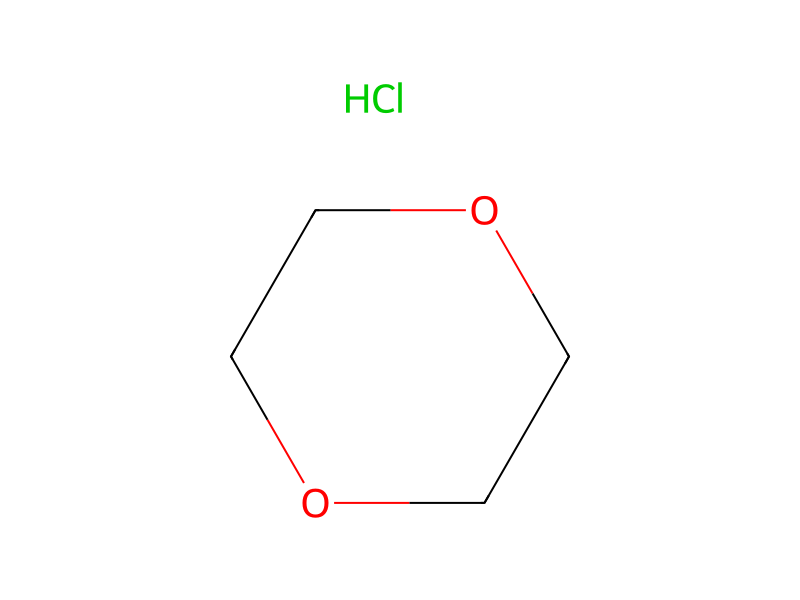

Produkt 1

Reagenzien, Katalysatoren, Lösungsmittel 1

Versuchsvorschrift
A suspension of 4 N hydrochloric acid-1,4-dioxane (8 ml) and 1,4-dioxane (8 ml) containing the tert-butyl (2-bromo-[1,2,4]triazolo[1,5-a]pyridin-7-yl)carbamate (400 mg) obtained in (Example 3.15) <Step 4> was heated to reflux for 40 minutes. Thereafter, the precipitated solid was collected by filtration, and was then washed with 1,4-dioxane (15 ml). The obtained solid was dried to obtain the title compound (279 mg) in the form of a white solid.
Aufarbeitung
- customobtained in (Example 3.15) <Step 4>
- temperaturewas heated
- temperatureto reflux for 40 minutes
- filtrationThereafter, the precipitated solid was collected by filtration
- washwas then washed with 1,4-dioxane (15 ml)
- customThe obtained solid was dried
Quellen und Nachweise
- ORD-Eintrag
- ord-fb9c287d09eb47e798457aaefe96e7f6
- Quelldatensatz
- uspto-grants-2016_09
- Patentnummer
- US09440970B2
Notizen zur Reaktion
Wird geladen…