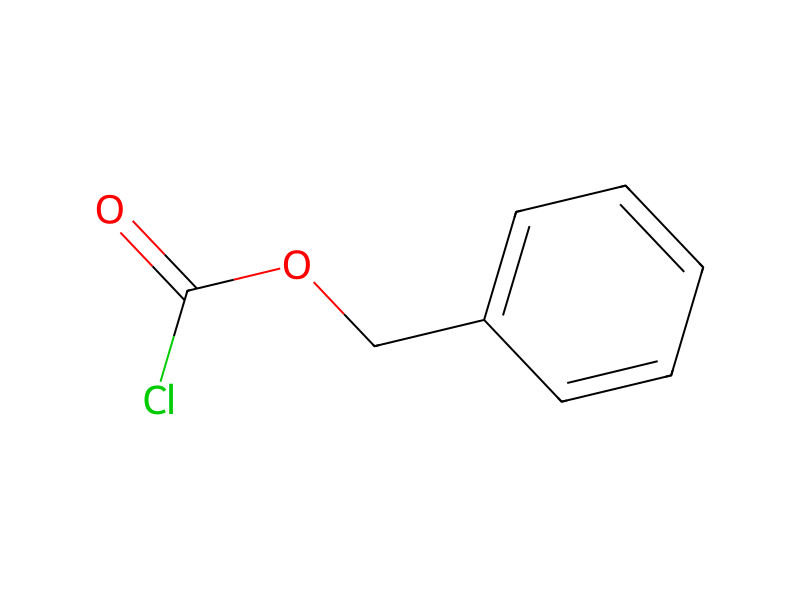
Sodium hydride (167 mg, 4.17 mmol) was added to a cooled (0° C.) mixture of 3-bromo-9H-dipyrido[2,3-b;4′,3′-d]pyrrol-5-ol (1.0 g, 3.79 mmol) in DMF (15 mL). On complete addition the mixture was stirred for 15 minutes then allowed to warm to ambient temperature and stirred for 15 minutes. A solution of benzyl chloroformate (610 mg, 3.6 mmol) in DMF (1 mL) was added and stirring continued for 18 hours. The solvent was evaporated and the resultant residue diluted with water and extracted with dichloromethane (5×50 mL) and ethyl acetate (3×30 mL). The combined organic layer was dried over (Na2SO4), filtered and evaporated to afford a residue. The resultant residue was purified by flash chromatography (silica, 12 g cartridge, ISCO, 0-7% methanol in dichloromethane). The appropriate fractions were collected and evaporated to afford the title compound as a light yellow solid (240 mg, 17%). LCMS (Method B): RT=4.54 min, M+H+=398/400. 1H NMR (400 MHz, DMSO-d6): 8.99 (s, 1H), 8.79 (d, J=2.4 Hz, 1H), 8.63 (d, J=2.4 Hz, 1H), 8.23 (s, 1H), 7.63 (d, J=7.5 Hz, 2H), 7.48-7.36 (m, 3H), 5.61 (s, 2H).