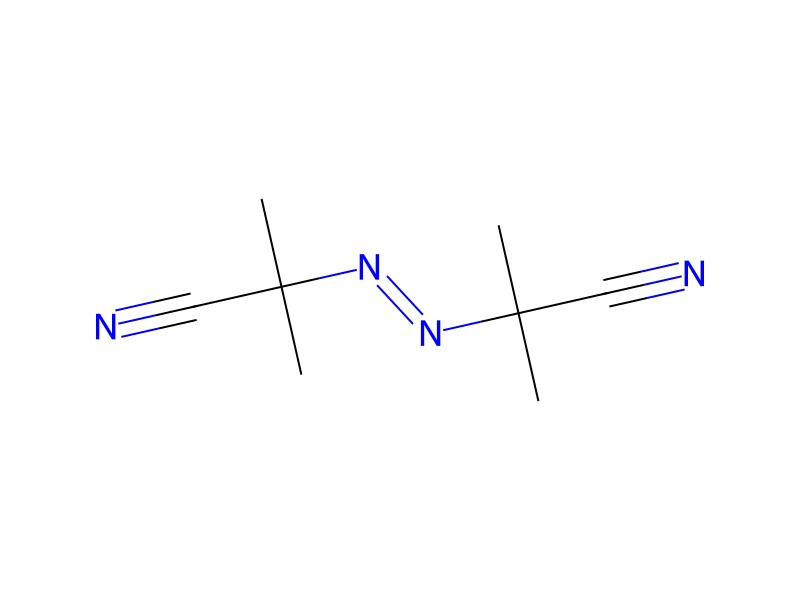
[CH3:1][C:2]1[C:10]2[C:9](=[O:11])[NH:8][C:7]([C:12]([O:14][CH2:15][CH3:16])=[O:13])=[N:6][C:5]=2[S:4][CH:3]=1.[Br:17]N1C(=O)CCC1=O.N(C(C)(C)C#N)=NC(C)(C)C#N>C(Cl)(Cl)(Cl)Cl>[Br:17][CH2:1][C:2]1[C:10]2[C:9](=[O:11])[NH:8][C:7]([C:12]([O:14][CH2:15][CH3:16])=[O:13])=[N:6][C:5]=2[S:4][CH:3]=1A mixture of ethyl 5-methyl-4-oxo-3,4-dihydrothieno[2,3-d]pyrimidine-2-carboxylate obtained according to the method described in U.S. Pat. No. 4,054,656 (1.00 g, 4.20 mmol), N-bromosuccinimide (784 mg, 4.41 mmol), 2,2′-azo-bis-isobutyronitrile (68.9 mg, 0.420 mmol) and carbon tetrachloride (30 mL) was heated under reflux for 3 hr. The solvent was evaporated under reduced pressure, and the obtained residue was extracted with ethyl acetate. The organic layer was washed with water (×3) and saturated brine, and dried over anhydrous sodium sulfate. The solvent was evaporated, and the obtained crude crystals were recrystallized from ethyl acetate to give ethyl 5-(bromomethyl)-4-oxo-3,4-dihydrothieno[2,3-d]pyrimidine-2-carboxylate (662 mg, 50%) as a pale-yellow powder.