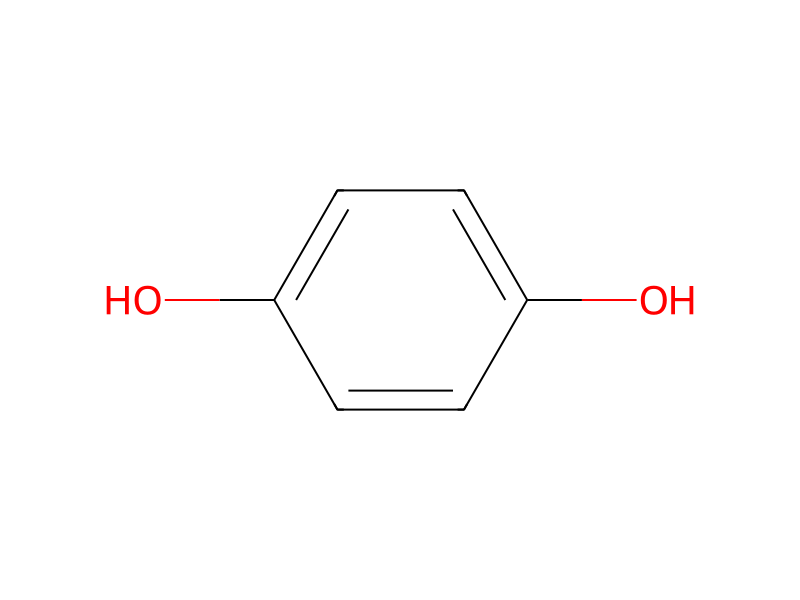
[C:1]1([CH:8]=[CH:7][C:5]([OH:6])=[CH:4][CH:3]=1)[OH:2].[Br:9][C:10]1[CH:11]=[C:12]([CH:25]=[CH:26][CH:27]=1)[CH2:13][O:14][C:15]1[CH:20]=[CH:19][C:18](Cl)=[C:17]([N+:22]([O-:24])=[O:23])[CH:16]=1.Cl>CS(C)=O>[Br:9][C:10]1[CH:11]=[C:12]([CH:25]=[CH:26][CH:27]=1)[CH2:13][O:14][C:15]1[CH:20]=[CH:19][C:18]([O:2][C:1]2[CH:8]=[CH:7][C:5]([OH:6])=[CH:4][CH:3]=2)=[C:17]([N+:22]([O-:24])=[O:23])[CH:16]=1A solution of hydroquinone (276.4 mg, 2.510 mmol) in anhydrous 3.64 mmol) and heated under a nitrogen atmosphere at 120° for 30 minutes. A solution of 4-(3-Bromo-benzyloxy)-1-chloro-2-nitro-benzene (from Example 15A) (774 mg, 2.259 mmol) in dimethylsulfoxide (4 mL) was added dropwise from an addition funnel over a period of 30 minutes at 120°, the mixture was then stirred at this temperature for 1 hour. The reaction was cooled in an ice bath, then poured into ice water (20 mL) and adjusted the pH to 2 with concentrated hydrochloric acid. The mixture was extracted with ethyl ether (3×100 mL), the combined ethereal extracts were washed with water (3×100 mL) and brine (50 mL), dried over anhydrous sodium sulfate, filtered and concentrated by rotary evaporation under vacuum. Purification of the residue by silica gel flash chromatography using 3% ethyl acetate/methylene chloride as eluent afforded the title compound as a dark yellow solid (386 mg, 0.927 mmol, 41%).