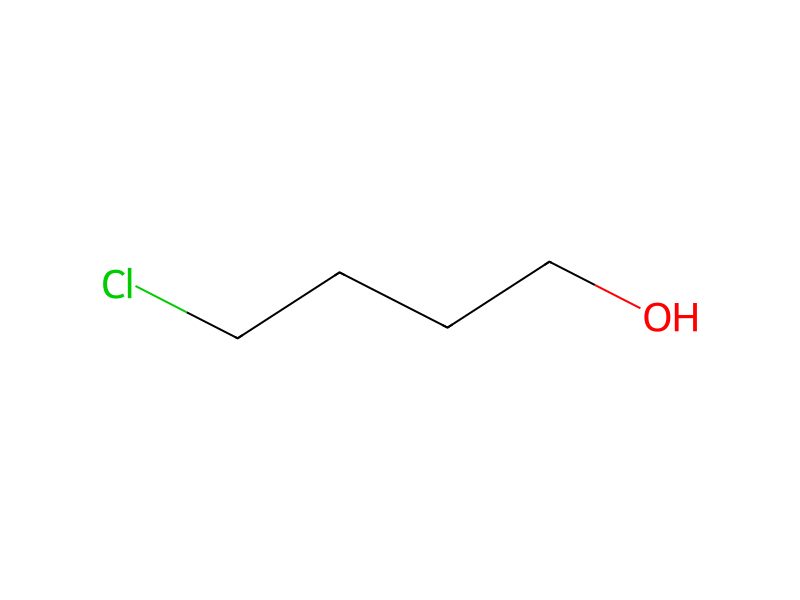
[CH2:1]([N:5]1[CH2:10][CH2:9][CH:8]([CH2:11][NH:12][C:13]([C:15]2[C:23]3[C:18](=[CH:19][CH:20]=[CH:21][CH:22]=3)[NH:17][CH:16]=2)=[O:14])[CH2:7][CH2:6]1)[CH2:2][CH2:3][CH3:4].[Cl:24][CH2:25][CH2:26][CH2:27][CH2:28][OH:29].ClN1C(=O)CCC1=O.C([O-])([O-])=O.[Na+].[Na+]>C(Cl)(Cl)Cl>[CH2:1]([N:5]1[CH2:10][CH2:9][CH:8]([CH2:11][NH:12][C:13]([C:15]2[C:23]3[C:18](=[CH:19][CH:20]=[CH:21][CH:22]=3)[NH:17][C:16]=2[O:29][CH2:28][CH2:27][CH2:26][CH2:25][Cl:24])=[O:14])[CH2:7][CH2:6]1)[CH2:2][CH2:3][CH3:4]A stirred suspension of N-[(1-n butyl-4-piperidyl)methyl] indole-3-carboxamide (Description 1b, 1.0 g, 0.0032 mole) in chloroform (25 ml) was treated with 4-chlorobutanol (0.69 ml, 0.0064 mole) followed by N-chlorosuccinimide (470 mg, 0.0035 mole) and a yellow solution was produced inside 5 minutes. After a further 40 minutes the solution was observed to darken in colour to orange. The mixture was kept at room temperature for a further 1 h then treated with 10% Na2CO3 solution (30 ml) and extracted with chloroform (2×30 ml). The combined extracts were dried (Na2SO4) and concentrated in vazcuo to afford an orange oil, which was chromatographed on silica gel eluting with 5% methanol/chloroform to give N-[(1-n butyl-4-piperidyl)methyl]2-(4-chlorobutoxy)indole-3-carboxamide (0.67 g, 50%) as a yellow oil.
Wird geladen…