Dimethylamine → 6-(Dimethylamino)pyrimidine-4-carboxylic acid
HRID 614378
Reaktionsgleichung

[C:1]([C:4]1[CH:9]=[C:8](Cl)[N:7]=[CH:6][N:5]=1)([OH:3])=[O:2].[CH3:11][NH:12][CH3:13]>>[C:1]([C:4]1[CH:9]=[C:8]([N:12]([CH3:13])[CH3:11])[N:7]=[CH:6][N:5]=1)([OH:3])=[O:2]Komponenten
3
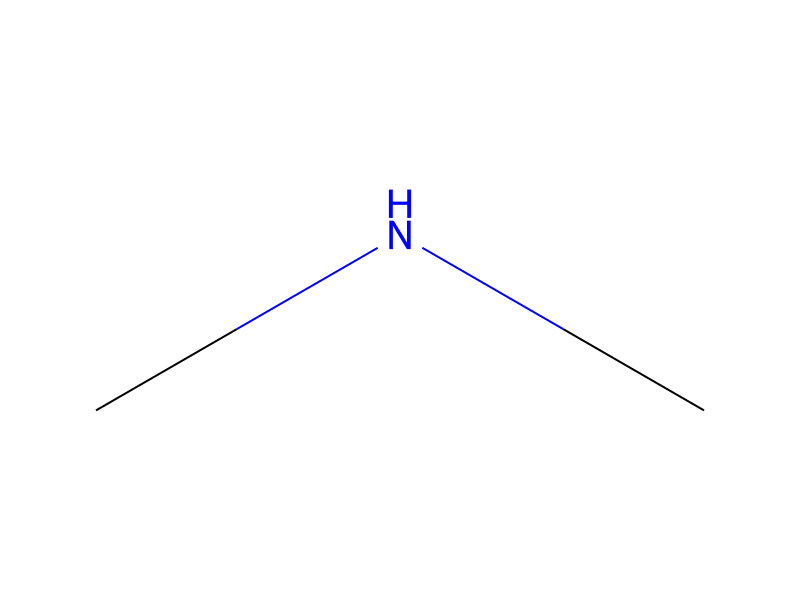


Versuchsvorschrift
A 40% aqueous dimethylamine solution (2000 cc) is added to 4-carboxy-6-chloropyrimidine (93.6 g). The mixture is allowed to stand for 3 days and then concentrated to dryness under reduced pressure. The residue is dissolved in water (300 cc). The solution is made alkaline by the addition of sodium bicarbonate powder to a pH of 8 to 9. The solution is then extracted with diisopropyl ether (1000 cc). The aqueous phase is acidified with 12N hydrochloric acid to a pH of 2 to 3. The precipitate is filtered off, washed with ice-water (30 cc) and then with isopropanol (120 cc). 4-Carboxy-6-dimethylaminopyrimidine (73.6 g), melting at 250° C., is obtained.
Aufarbeitung
- concentration