StartseiteMCPWorkbenchSkills
StartseiteWorkbenchBenachrichtigungenMein Bereich
llms.txt · MCP-AnleitungDatenschutz · Nutzungsbedingungen · Supportv1.8.3
  1. Startseite
  2. /Reaktion

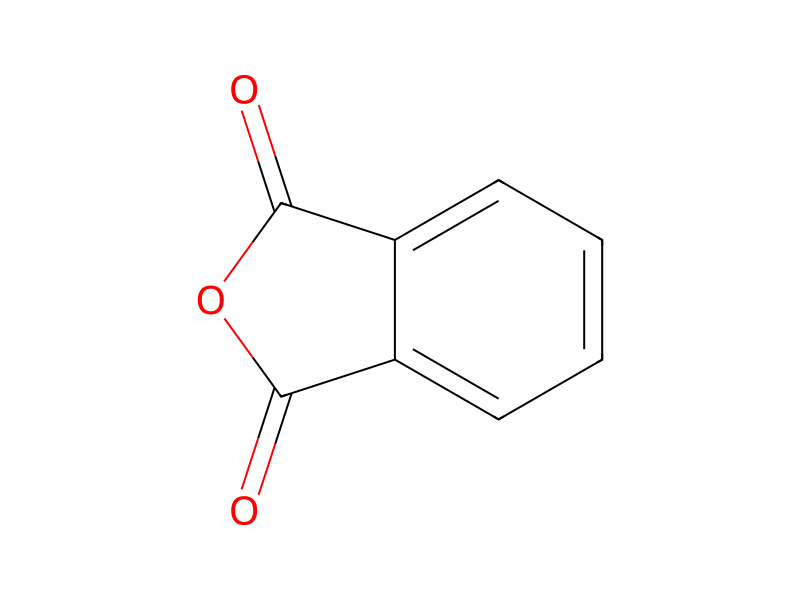
Phthalic Anhydride → 2-(2-Chloropyridin-3-yl)-1H-isoindole-1,3(2H)-dione

HRID 615947
Drucken

Reaktionsgleichung

Reaktionsgleichung von HRID 615947
[C:1]1(=[O:11])[O:6][C:4](=O)[C:3]2=[CH:7][CH:8]=[CH:9][CH:10]=[C:2]12.[NH2:12][C:13]1[C:14]([Cl:19])=[N:15][CH:16]=[CH:17][CH:18]=1.C1(C)C(S(O)(=O)=O)=CC=CC=1>ClC1C=CC=CC=1Cl>[Cl:19][C:14]1[C:13]([N:12]2[C:1](=[O:11])[C:2]3=[CH:10][CH:9]=[CH:8][CH:7]=[C:3]3[C:4]2=[O:6])=[CH:18][CH:17]=[CH:16][N:15]=1
KomponentenReaktionsbedingungenVersuchsvorschriftAufarbeitungQuellen und NachweiseNotizen zur Reaktion

Komponenten

5

Edukt 3

HCID 6811Phthalic AnhydrideHCID 69252-Methylbenzenesulfonic acidHCID 805282-Chloro-3-pyridylamine

Produkt 1

HCID 545217332-(2-Chloropyridin-3-yl)-1H-isoindole-1,3(2H)-dioneAusbeute 99 %

Reagenzien, Katalysatoren, Lösungsmittel 1

HCID 72391,2-DichlorobenzeneLösungsmittel

Reaktionsbedingungen

Temperatur
30 °C

Versuchsvorschrift

A stirred slurry containing 15 grams of phthalic anhydride, 13 grams of 3-amino-2-chloropyridine, one gram of toluenesulfonic acid and 200 ml. of o-dichlorobenzene was heated at reflux for 6 hours. During this heating period 100 ml. of solvent and 1.8 ml. of water were removed. After cooling to 30° C., 50 ml. of heptane and 10 ml. of water were added and stirring was continued. The solid was collected by filtration and air dried. A 99 percent yield of N-(2-chloro-3-pyridyl) phthalimide, m.p. 156°-7° C., was obtained.

Aufarbeitung

  1. temperatureat reflux for 6 hours
  2. waitDuring this heating period 100 ml
  3. customof water were removed
  4. additionof water were added
  5. filtrationThe solid was collected by filtration and air
  6. customdried

Quellen und Nachweise

ORD-Eintrag
ord-12c0904d149d451db2bbed467ef416e9
Quelldatensatz
uspto-grants-1978_02
DOI
10.6084/m9.figshare.5104873.v1
Patentnummer
US04072499

Notizen zur Reaktion

Auf dieser SeiteKomponentenReaktionsbedingungenVersuchsvorschriftAufarbeitungQuellen und NachweiseNotizen zur Reaktion