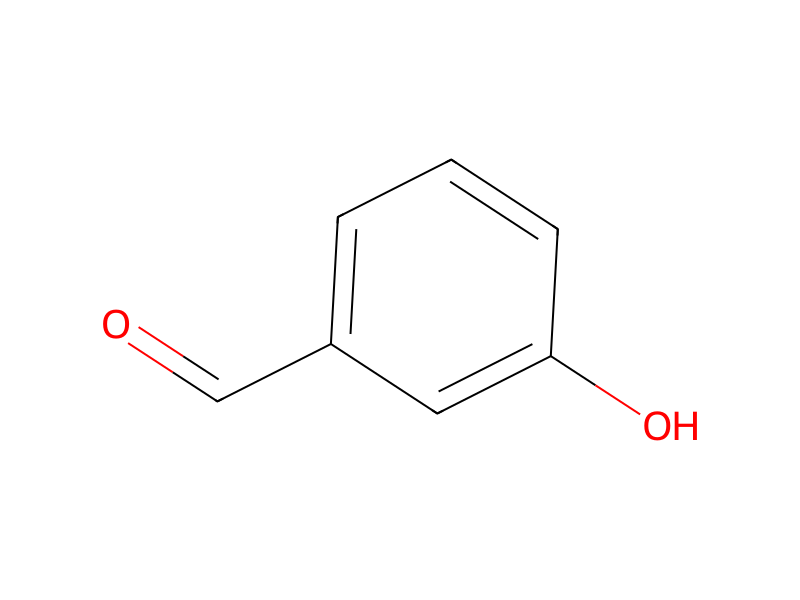
To a solution of 3-Hydroxybenzaldehyde (3.05 g, 24.97 mmol) in acetonitrile (15 ml) was added K2CO3 (7.6 g), followed by N-(2-chloroethyl)morpholine hydrochloride (4.65 g). The reaction mixture was stirred at room temperature for 30 minutes, then at reflux overnight. Additional N-(2-chloroethyl)morpholine hydrochloride (0.93 g) and K2CO3 (0.7 g) were added and the mixture was refluxed for an additional 6 hours. The reaction mixture was cooled to room temperature, filtered and the filtrate was concentrated in vacuo. The residue was partitioned between water and chloroform, the layers were separated and the aqueous layer was extracted with chloroform (2×75 ml). The organic layers were combined, washed with brine, dried over MgSO4, filtered and stripped to afford 7.3 g of 3-[2-(4-morpholinyl)ethoxy]benzaldehyde, as an amber liquid.