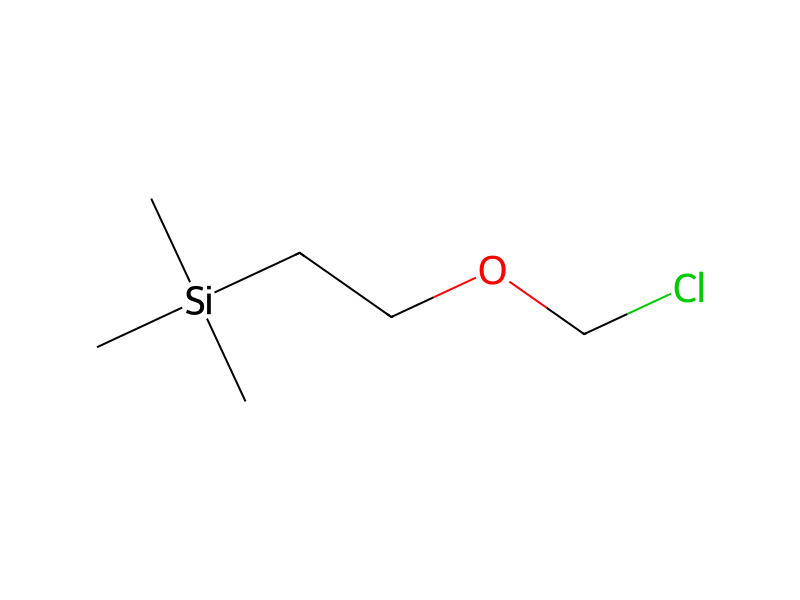
[H-].[Na+].NC[CH2:5][N:6]1[C:14](C2C=CC=C(Cl)C=2)=[C:13]2[C:8]([N:9]([CH3:25])[C:10](=[O:24])[N:11]([CH3:23])[C:12]2=[O:22])=[CH:7]1.[CH3:26][Si:27]([CH2:30][CH2:31][O:32]CCl)([CH3:29])[CH3:28]>[Cl-].C([N+](CC)(CC)CC)C1C=CC=CC=1.C1COCC1>[CH3:25][N:9]1[C:8]2=[CH:7][N:6]([CH2:5][O:32][CH2:31][CH2:30][Si:27]([CH3:29])([CH3:28])[CH3:26])[CH:14]=[C:13]2[C:12](=[O:22])[N:11]([CH3:23])[C:10]1=[O:24]Sodium hydride (60% in mineral oil, 335 mg, 8.4 mmol) was added to an ice cooled partial suspension of 1,3-dimethyl-1H-pyrrolo[3,4-d]pyrimidine-2,4(3H,6H)-dione (Intermediate B step 1) (1.00 g, 5.6 mmol), SEM-Cl (1.485 mL, 8.4 mmol) and benzyl triethylammonium chloride (76 mg, 0.34 mmol) in THF (15 mL). The mixture was allowed to reach room temperature slowly and was stirred for 18 hours. The reaction mixture was quenched cautiously with sat ammonium chloride solution (80 mL, added dropwise), then was extracted with ethyl acetate (3×40 mL). The combined organic layers were washed with water (1×40 mL), brine (1×40 mL) then dried with magnesium sulfate and the solvent was removed under vacuum. The residue was triturated with iso-hexane and dried under vacuum at 50° C. to afford the title compound.