Triethylamine → 3-Nitro-2-vinylpyridine
Reaktionsgleichung

Cl[C:2]1[C:7]([N+:8]([O-:10])=[O:9])=[CH:6][CH:5]=[CH:4][N:3]=1.[B-](F)(F)(F)[CH:12]=[CH2:13].[K+].C(N(CC)CC)C>C(O)(C)C.C1C=CC(P(C2C=CC=CC=2)[C-]2C=CC=C2)=CC=1.C1C=CC(P(C2C=CC=CC=2)[C-]2C=CC=C2)=CC=1.Cl[Pd]Cl.[Fe+2]>[N+:8]([C:7]1[C:2]([CH:12]=[CH2:13])=[N:3][CH:4]=[CH:5][CH:6]=1)([O-:10])=[O:9]Komponenten
Edukt 3

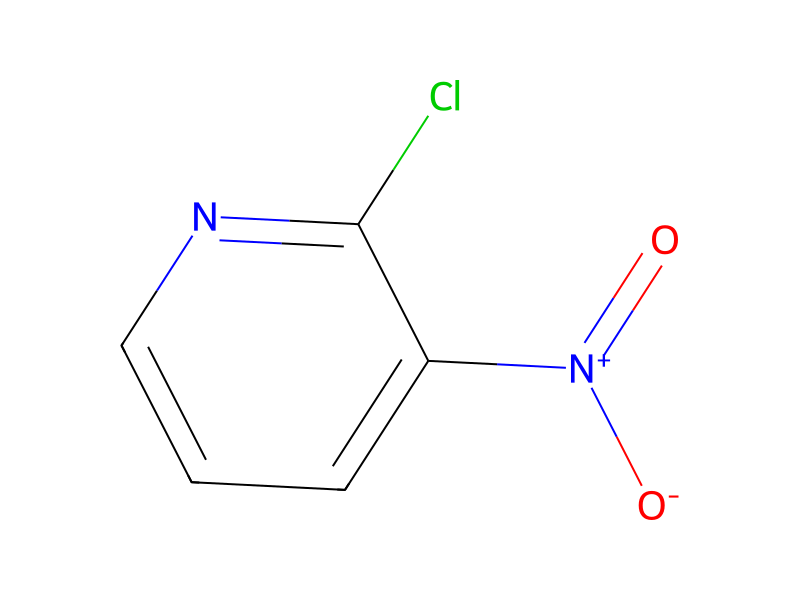

Produkt 1

Reagenzien, Katalysatoren, Lösungsmittel 2


Reaktionsbedingungen
- Temperatur
- 100 °C
Versuchsvorschrift
A solution of 2-chloro-3-nitropyridine (0.20 g, 1.261 mmol), potassium trifluoro(vinyl)borate (0.203 g, 1.514 mmol) and PdCl2(dppf) (0.018 g, 0.025 mmol) dissolved in isopropanol (4 mL) and triethylamine (0.211 mL, 1.514 mmol) was gently purged with stream of nitrogen for a few minutes then heated at 100° C. for 4 h. The reaction was cooled and filtered through CELITE® and the solvent was removed under vacuum. The resulting residue was purified via automated flash chromatography (40 gram silica gel, hex/ethyl acetate). Fractions containing the desired product were collected, combined, and evaporated in vacuo to afford tan oil as final product, 3-nitro-2-vinylpyridine (100 mg, 0.666 mmol, 52.8% yield). HPLC RT (Method N)=1.75 minutes.
Aufarbeitung
- temperatureThe reaction was cooled
- filtrationfiltered through CELITE®
- customthe solvent was removed under vacuum
- customThe resulting residue was purified
- additionFractions containing the desired product
- customwere collected
- customevaporated in vacuo
Quellen und Nachweise
- ORD-Eintrag
- ord-45a867ebb3d44c2c931dd8009d701aa4
- Quelldatensatz
- uspto-grants-2016_04
- Patentnummer
- US09315494B2
Notizen zur Reaktion
Wird geladen…