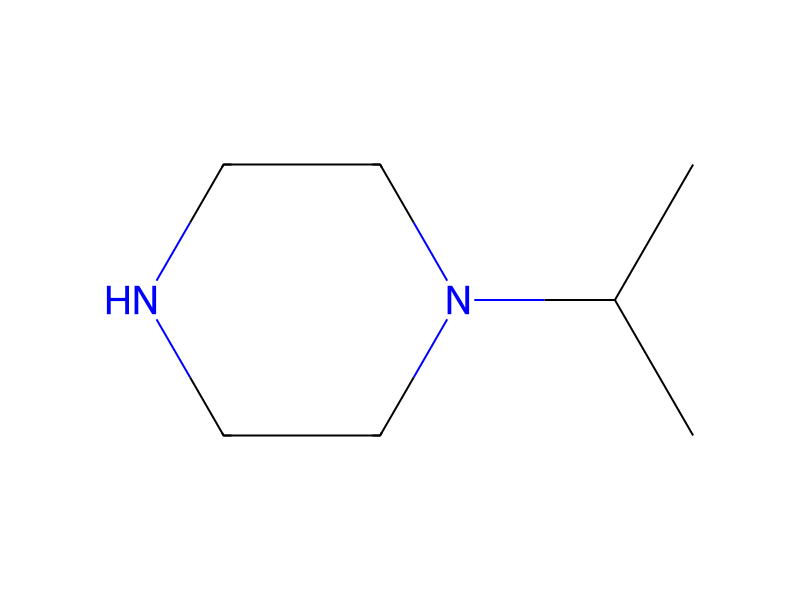
F[C:2]1[CH:9]=[CH:8][C:7]([N+:10]([O-:12])=[O:11])=[CH:6][C:3]=1[C:4]#[N:5].[CH:13]([N:16]1[CH2:21][CH2:20][NH:19][CH2:18][CH2:17]1)([CH3:15])[CH3:14].C([O-])([O-])=O.[K+].[K+]>CN(C=O)C>[CH:13]([N:16]1[CH2:21][CH2:20][N:19]([C:2]2[CH:9]=[CH:8][C:7]([N+:10]([O-:12])=[O:11])=[CH:6][C:3]=2[C:4]#[N:5])[CH2:18][CH2:17]1)([CH3:15])[CH3:14]A mixture of 2-fluoro-5-nitrobenzonitrile (1.08 g, 6.50 mmol, 1 equiv), 1-isopropylpiperazine (1.0 g, 7.80 mmol, 1.2 equiv), and K2CO3 (2.69 g, 19.50 mmol, 3 equiv) in DMF (20 mL) was stirred at room temperature overnight. The reaction mixture was partitioned between excess water and EtOAc, and then the layers were separated. The aqueous layer was extracted with EtOAc 2×, and the combined organic layer was washed with brine 1×. The organic layer was dried over Na2SO4, filtered, and concentrated to dryness to provide 2-(4-isopropylpiperazin-1-yl)-5-nitrobenzonitrile (1.76 g, 99% yield) as a brown oil that was used without further purification.