StartseiteMCPWorkbenchSkills
StartseiteWorkbenchBenachrichtigungenMein Bereich
llms.txt · MCP-AnleitungDatenschutz · Nutzungsbedingungen · Supportv1.8.0
  1. Startseite
  2. /Reaktion

Diisopropylcarbodiimide → 1-(4-(1,3-Dioxoisoindolin-2-yl)-2-(ethoxymethyl)-1H-imidazo[4,5-c]quinolin-1-yl)-2-methylpropan-2-yl 2-(1,3-dioxoisoindolin-2-yl)acetate

HRID 63693
Notizen
Druckvorschau

Reaktionsgleichung

Reaktionsgleichung von HRID 63693
[CH2:1]([O:3][CH2:4][C:5]1[N:6]([CH2:29][C:30]([OH:33])([CH3:32])[CH3:31])[C:7]2[C:16]3[CH:15]=[CH:14][CH:13]=[CH:12][C:11]=3[N:10]=[C:9]([N:17]3[C:25](=[O:26])[C:24]4[C:19](=[CH:20][CH:21]=[CH:22][CH:23]=4)[C:18]3=[O:27])[C:8]=2[N:28]=1)[CH3:2].[O:34]=[C:35]1[C:43]2[C:38](=[CH:39][CH:40]=[CH:41][CH:42]=2)[C:37](=[O:44])[N:36]1[CH2:45][C:46](O)=[O:47].N1(C2C=CN=CC=2)CCCC1.C(N=C=NC(C)C)(C)C>C(Cl)Cl>[O:34]=[C:35]1[C:43]2[C:38](=[CH:39][CH:40]=[CH:41][CH:42]=2)[C:37](=[O:44])[N:36]1[CH2:45][C:46]([O:33][C:30]([CH3:32])([CH3:31])[CH2:29][N:6]1[C:7]2[C:16]3[CH:15]=[CH:14][CH:13]=[CH:12][C:11]=3[N:10]=[C:9]([N:17]3[C:18](=[O:27])[C:19]4[C:24](=[CH:23][CH:22]=[CH:21][CH:20]=4)[C:25]3=[O:26])[C:8]=2[N:28]=[C:5]1[CH2:4][O:3][CH2:1][CH3:2])=[O:47]
KomponentenReaktionsbedingungenVersuchsvorschriftAufarbeitungQuellen und NachweiseNotizen zur Reaktion

Komponenten

6

Edukt 4

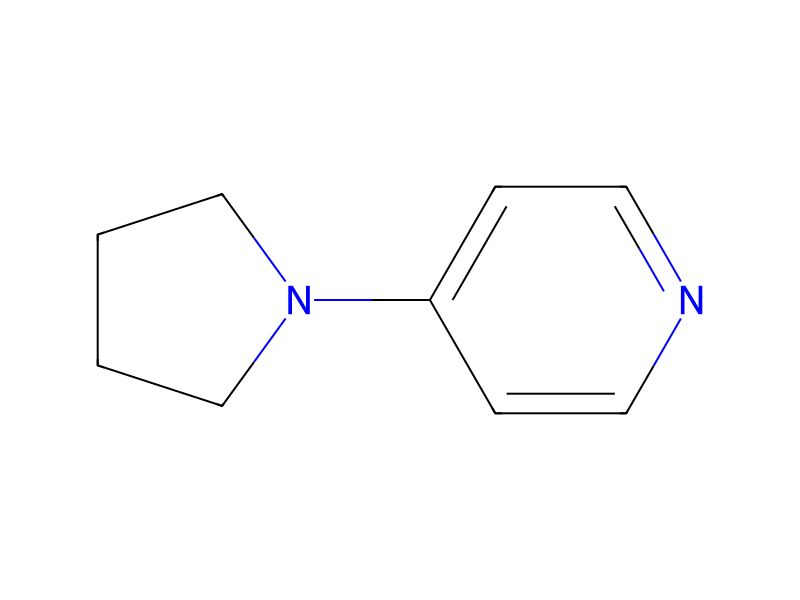
HCID 12734DiisopropylcarbodiimideHCID 20825N-PhthaloylglycineHCID 755674-PyrrolidinopyridineHCID 1184516112-(2-(Ethoxymethyl)-1-(2-hydroxy-2-methylpropyl)-1H-imidazo[4,5-c]quinolin-4-yl)isoindoline-1,3-dione

Produkt 1

HCID 1184516171-(4-(1,3-Dioxoisoindolin-2-yl)-2-(ethoxymethyl)-1H-imidazo[4,5-c]quinolin-1-yl)-2-methylpropan-2-yl 2-(1,3-dioxoisoindolin-2-yl)acetate
Ausbeute 85,8 %

Reagenzien, Katalysatoren, Lösungsmittel 1

HCID 6344DichloromethaneLösungsmittel

Reaktionsbedingungen

Temperatur
50 °C

Versuchsvorschrift

2-(2-(Ethoxymethyl)-1-(2-hydroxy-2-methylpropyl)-1H-imidazo[4,5-c]quinolin-4-yl)isoindoline-1,3-dione (1600 mg, 3.6 mmol), 1,3-dihydro-1,3-dioxo-2H-isoindole-2-acetic acid (CAN 4702-13-0, 2.22 g, 10.8 mmol) and 4-(1-pyrrolidinyl)-pyridine (800 mg, 5.4 mmol) were combined with DCM (36 mL) to give a white suspension. N,N′-diisopropylcarbodiimide (1.68 mL, 10.8 mmol) and molecular sieves were added. The reaction mixture was heated to 50° C. and stirred for 2 hours and was, after cooling, filtered. The filtrate was diluted with DCM (150 mL) and washed with 1 N hydrochloric acid and water. Water phases were extracted with DCM, organic phases were combined, dried over MgSO4, filtered and concentrated in vacuo. Diisopropylurea was removed after trituration with DCM/methanol by filtration, the filtrate was concentrated and the residue was purified by flash chromatography (silica gel, 0% to 100% ethyl acetate in heptane) to give a light yellow solid. Crystallization from DMSO yielded a first crop of product (1.95 g), and the mother liquor after concentration and preparative HPLC another 0.13 g of product. In total 2.08 g (91%) of the title compound was isolated as white solid; LC-MS (UV peak area, ESI) 95.9%, 632.2157 (MH+).

Aufarbeitung

  1. customto give a white suspension
  2. temperatureafter cooling
  3. filtrationfiltered
  4. additionThe filtrate was diluted with DCM (150 mL)
  5. washwashed with 1 N hydrochloric acid and water
  6. extractionWater phases were extracted with DCM, organic phases
  7. dry with materialdried over MgSO4
  8. filtrationfiltered
  9. concentrationconcentrated in vacuo
  10. customDiisopropylurea was removed after trituration with DCM/methanol
  11. filtrationby filtration
  12. concentrationthe filtrate was concentrated
  13. customthe residue was purified by flash chromatography (silica gel, 0% to 100% ethyl acetate in heptane)
  14. customto give a light yellow solid
  15. customCrystallization from DMSO

Quellen und Nachweise

ORD-Eintrag
ord-8e91e4e4cc244ac69296c695cc96b263
Quelldatensatz
uspto-grants-2016_09
DOI
10.6084/m9.figshare.5104873.v1
Patentnummer
US09447097B2

Notizen zur Reaktion

Wird geladen…

Auf dieser SeiteKomponentenReaktionsbedingungenVersuchsvorschriftAufarbeitungQuellen und NachweiseNotizen zur Reaktion