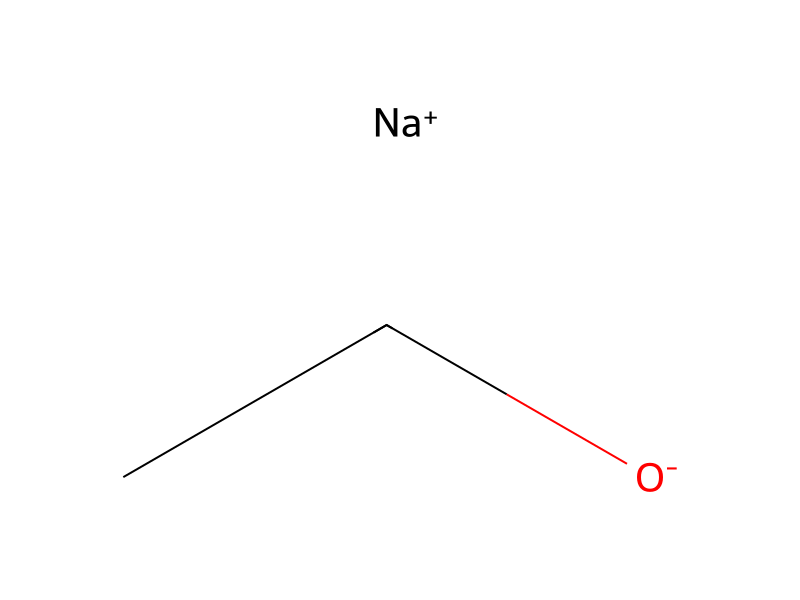
[O-][CH2:2][CH3:3].[Na+].[Br:5][C:6]1[CH:15]=[CH:14][C:13]2[C:8](=[CH:9][CH:10]=[C:11]([Br:17])[C:12]=2[OH:16])[C:7]=1[OH:18].[CH2:19](Br)[CH2:20][CH2:21][CH2:22][CH2:23][CH3:24]>C(O)C>[Br:5][C:6]1[CH:15]=[CH:14][C:13]2[C:8](=[CH:9][CH:10]=[C:11]([Br:17])[C:12]=2[O:16][CH2:19][CH2:20][CH2:21][CH2:22][CH2:23][CH3:24])[C:7]=1[O:18][CH2:15][CH2:6][CH2:7][CH2:8][CH2:2][CH3:3]Under an inert atmosphere, sodium ethoxide (2.76 g, 40.6 mmol) and 2,6-dibromo-1,5-di hydroxynaphthalene (5 g, 15.7 mmol) were dissolved in ethanol (60 ml). Under reflux, ethanol solution (10 ml) of hexylbromide (6.7 g, 40.6 mmol) was added dropwise in 10 minutes. It was refluxed for 5 hours and then left for cooling. The reaction mixture was added to 1N sodium-hydroxide aqueous solution, and the depositing precipitate was filtrated. The precipitate was washed with methylene chloride, and the washed solution was concentrated under a reduced pressure to obtain a crude product. The desired product was obtained after purifying by silica gel chromatography (toluene:hexane=4:1).