Reaktionsgleichung

[OH:1][C:2]1[CH:15]=[CH:14][C:13]2[C:12](=[O:16])[C:11]3[C:6](=[CH:7][CH:8]=[CH:9][CH:10]=3)[C:5](=[O:17])[C:4]=2[CH:3]=1.[C:18](Cl)(=[O:22])[C:19]([CH3:21])=[CH2:20]>N1C=CC=CC=1>[C:18]([O:1][C:2]1[CH:15]=[CH:14][C:13]2[C:12](=[O:16])[C:11]3[C:6](=[CH:7][CH:8]=[CH:9][CH:10]=3)[C:5](=[O:17])[C:4]=2[CH:3]=1)(=[O:22])[C:19]([CH3:21])=[CH2:20]Komponenten
Edukt 2
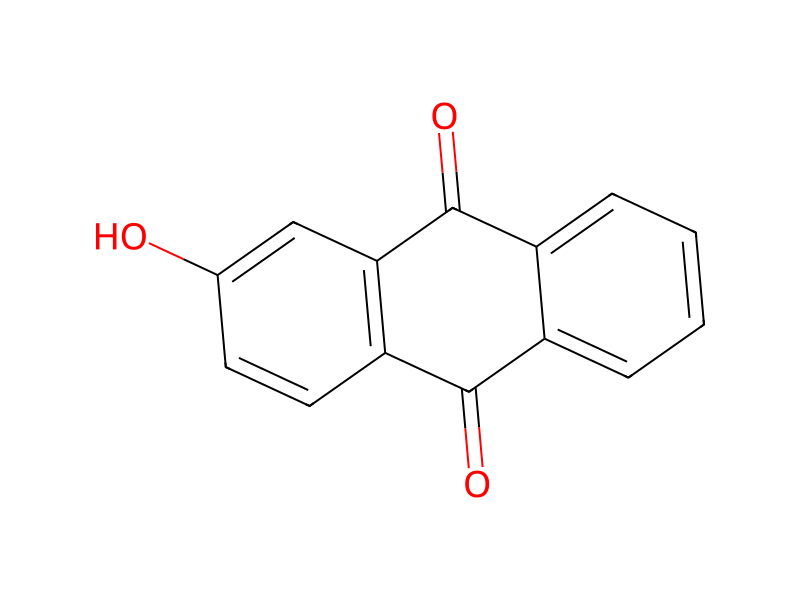
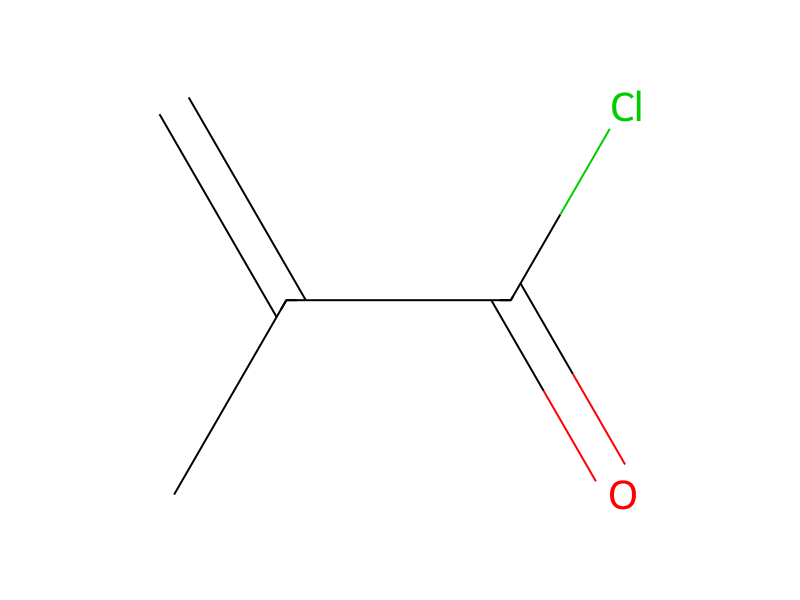
Produkt 1

Reagenzien, Katalysatoren, Lösungsmittel 1

Versuchsvorschrift
0.2 mol of 2-hydroxyanthraquinone is dissolved in 600 ml of pyridine under an inert gas in a 1,000 ml brown glass flask with a dropping funnel and thermometer. 0.24 mol of methacryloyl chloride is then added dropwise in the course of 15 minutes, with ice-cooling. After the mixture has been stirred at room temperature for 20 hours, the pyridine is removed on a rotary evaporator. The crude crystalline product is suspended in 500 ml of 0.1 N HCl, the suspension is filtered, the solid is taken up in water again and, after washing with sodium bicarbonate solution and water, the crude product is dried in vacuo. Yield of crude product: 90% of theory. Recrystallisation of the crude product from ethylene glycol monomethyl ether gives a 58% yield of 2-anthraquinonyl methacrylate as a yellow crystalline product; melting point: 184-186° C. ε254 =50200, ε325 =5200 in ethanol.
Aufarbeitung
- temperaturecooling
- customthe pyridine is removed on a rotary evaporator
- filtrationthe suspension is filtered
- washafter washing with sodium bicarbonate solution and water
- dry with materialthe crude product is dried in vacuo
- customRecrystallisation of the crude product from ethylene glycol monomethyl ether
Quellen und Nachweise
- ORD-Eintrag
- ord-843e0b34082e424abfdbd162e3443e12
- Quelldatensatz
- uspto-grants-1987_06
- Patentnummer
- US04677155
Verknüpfte Notizen
Wird geladen…