Methacryloylchlorid
Methacryloyl chloride
Daten werden ergänzt – lade die Seite später neu, um den aktuellen Stand zu sehen
Grundinformationen
- CAS
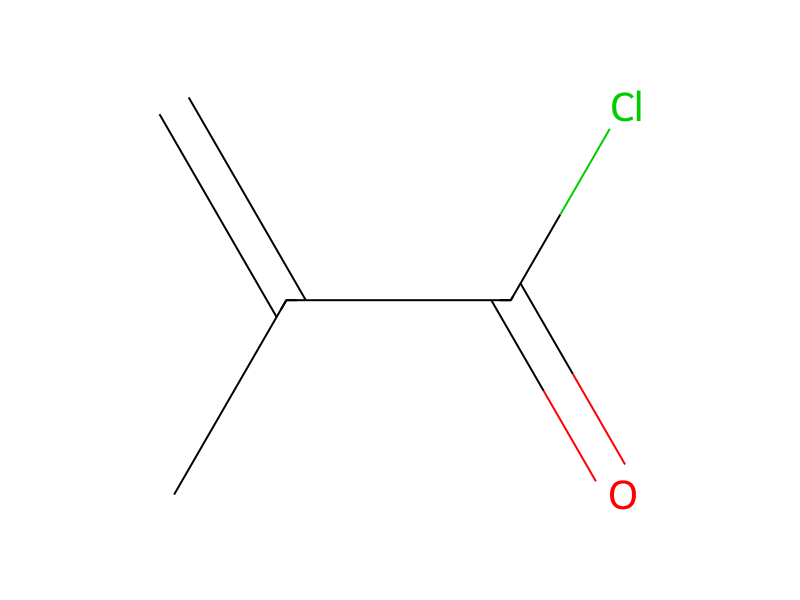
920-46-7- Standard-SMILES
C=C(C)C(=O)Cl- InChIKey
VHRYZQNGTZXDNX-UHFFFAOYSA-N- Summenformel
- C4H5ClO
- Durchschnittliche Molmasse
- 104,53 g/mol
- Monoisotopische Masse
- 104,00289246
Überblick
Methacryloyl chloride appears as a liquid of density 1.07 g / cm3, boiling point 95-96 °C, and flash point 55 °F. Highly toxic. Supplied in technical grades of varying purity.
Namen und Bezeichner
- Bevorzugter Name
- Methacryloyl chloride
- IUPAC
- 2-methylprop-2-enoyl chloride
- Lokaler Name
- Methacryloylchlorid
- Englischer Name
- Methacryloyl chloride
- Summenformel
- C4H5ClO
- Molmasse
- 104.53
Namen und Synonyme
METHACRYLOYL CHLORIDE920-46-7Methacrylyl chloride2-Methyl-2-propenoyl chlorideMethacrylic acid chlorideMethacryl chloride2-Propenoyl chloride, 2-methyl-Methacrylic chloride2-Methylpropenoyl chlorideMethylacryloyl chloride2-Methylpropenoic acid chlorideL76O6653IO
Weitere Namen anzeigen
Methacryloyl chlorid2-METHYL-ACRYLOYL CHLORIDEmethylacryloylchloridemethacrylchloridemethacrylolchloridemethacrylicchloride
alpha-Methylacryloyl chlorideDTXSID6061280RefChem:811289DTXCID8048785213-058-9Methacryloylchloride2-methylprop-2-enoyl chloride.alpha.-Methylacryloyl chloride
Datenbank-Bezeichner
- CAS
920-46-7- PubChem CID
- 13528
- DTXSID
DTXSID6061280- UNII
- L76O6653IO
Eigenschaften
Berechnete StruktureigenschaftenWird ergänzt
- XLogP
- 1,7
- Polarare Oberfläche (TPSA)
- 17,1 Ų
- H-Brücken-Donoren
- 0
- H-Brücken-Akzeptoren
- 1
- Frei drehbare Bindungen
- 1
- Schwere Atome
- 6
- Formalladung
- 0
- Komplexität
- 85,5
Experimentelle und physikochemische Eigenschaften
Chemical Classes
Toxic Gases & Vapors -> Other Toxic Gases & Vapors
Corrosives
SpringerMaterials PropertiesSchoenflies notation
Density
1.0871 at 68 °F (EPA, 1998) - Denser than water; will sink
1.0871 g/cu cm @ 20 °C
SolubilitySol in ether, acetone, chloroform
Boiling Point
205 °F at 760 mmHg (EPA, 1998)
96 °C
96 °C @760 [mm Hg]
DecompositionWhen heated to decomposition it emits toxic fumes of /hydrogen chloride/.
Melting Point
-60 °C
-60 °C
Vapor Pressure
45.5 [mmHg]
40 [mm Hg] @25 °C
Sicherheit und Regulatorisches
Sicherheitsangaben dienen nur zur Orientierung und ersetzen weder das Sicherheitsdatenblatt (SDB) des Lieferanten noch geltende Vorschriften oder eine fachliche Bewertung.
GHS-Klassifizierung
GHS Classification
Danger
H225 (100%): Highly Flammable liquid and vapor [Danger Flammable liquids]
P210, P233, P240, P241, P242, P243, P260, P261, P264, P270, P271, P272, P273, P280, P284, P301+P317, P301+P330+P331, P302+P352, P302+P361+P354, P303+P361+P353, P304+P340, P305+P354+P338, P316, P320, P321, P330, P333+P317, P362+P364, P363, P370+P378, P403+P233, P403+P235, P405, and P501 (click each P-code to see the statement)
Aggregated GHS information provided per 53 reports by companies from 6 notifications to the ECHA C&L Inventory. Each notification may be associated with multiple companies.
Danger
H225: Highly Flammable liquid and vapor [Danger Flammable liquids]
Gefahrenhinweise
Regulatory Information
Status: Active Update: 12-03-2019 https://echa.europa.eu/registration-dossier/-/registered-dossier/23665
The New Jersey Worker and Community Right to Know Act requires public and private employers to provide information about hazardous substances at their workplaces. (N.J.S.A. 34:5A-1 et. seq.)
DOT LabelFlammable Liquid Poison Corrosive
Fire HazardsExcerpt from ERG Guide 131 [Flammable Liquids - Toxic]:
Health HazardsExcerpt from ERG Guide 131 [Flammable Liquids - Toxic]:
Hazards Summary
Flammable and corrosive; [Hawley] A strong skin irritant; [HSDB] Reacts with water evolving hydrogen chloride gas; Highly flammable and toxic; [CAMEO] A corrosive substance that can cause injury to the skin, eyes, and respiratory tract; Inhalation may cause chemical pneumonitis; [MSDSonline]
Chemie und Industrie
Verwendung und Herstellung
Uses
Used in the production of hydrogel for contact lenses; [HSDB]
A hydrogel with 80% water absorption was obtained from reaction of 2-hydroxyethyl methacrylate, containing small amounts of ethylene glycol dimethacrylate with the reaction product of poly(vinylpyrrolidinone) & methacryloyl chloride /contact lenses/
Formulations/PreparationsAvailable forms: Technical 90% stabilized with phenothiazine
General Manufacturing Information2-Propenoyl chloride, 2-methyl-: ACTIVE
Vor- und nachgelagerte Produkte
Nachgelagerte Produkte
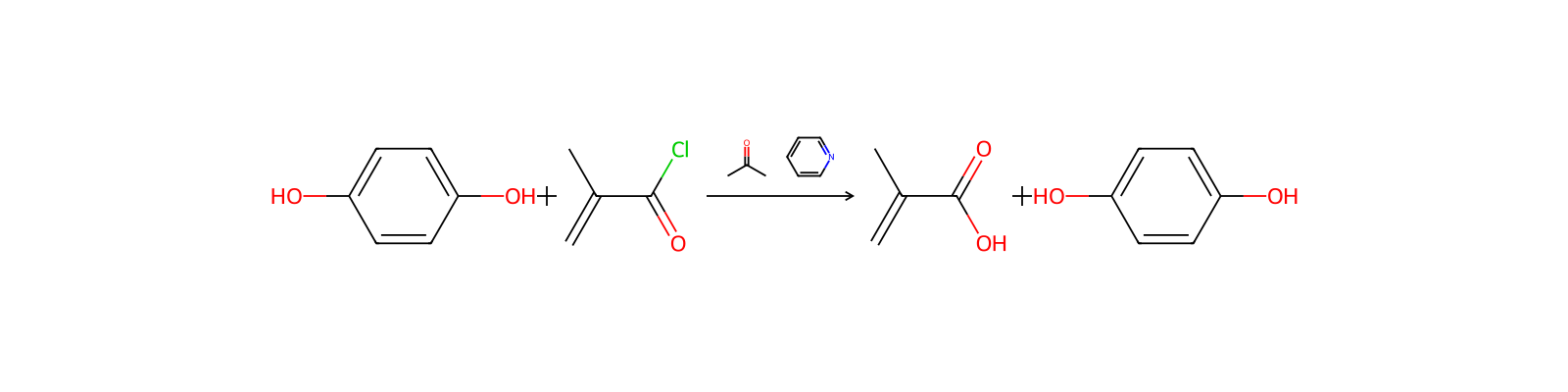
Zugehörige Reaktionen
674


Notizen zur Verbindung
Wird geladen…