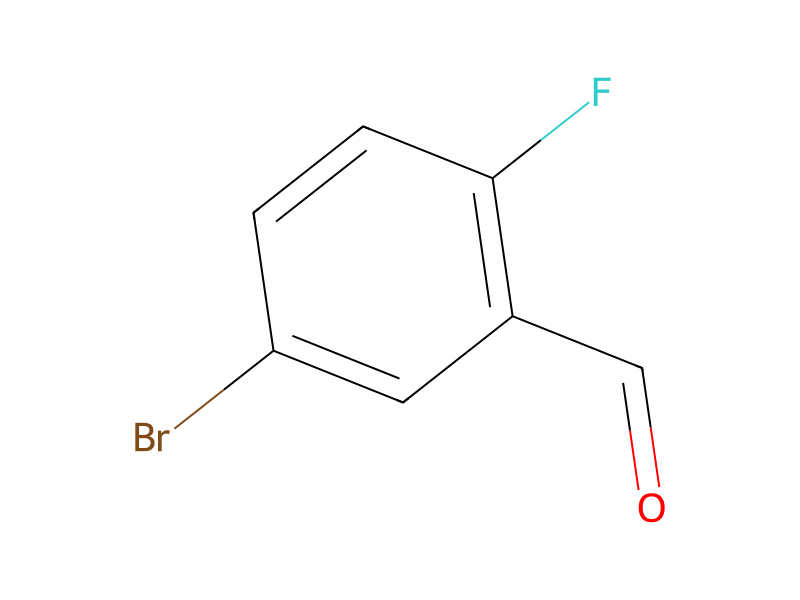
5-Bromo-2-fluorobenzaldehyde → (5-Bromo-2-fluorophenyl)(4-chlorophenyl)methanol
HRID 659887
Reaktionsgleichung

[Br:1][C:2]1[CH:3]=[CH:4][C:5]([F:10])=[C:6]([CH:9]=1)[CH:7]=[O:8].[Cl:11][C:12]1[CH:17]=[CH:16][C:15]([Mg]Br)=[CH:14][CH:13]=1>O1CCCC1>[Br:1][C:2]1[CH:3]=[CH:4][C:5]([F:10])=[C:6]([CH:7]([C:15]2[CH:16]=[CH:17][C:12]([Cl:11])=[CH:13][CH:14]=2)[OH:8])[CH:9]=1Komponenten
4
Edukt 2

Produkt 1

Reagenzien, Katalysatoren, Lösungsmittel 1

Versuchsvorschrift
A solution of 5-bromo-2-fluorobenzaldehyde (10.2 g, 50 mmol) in anhydrous tetrahydrofuran (200 mL) was cooled to −78° C. A solution of 4-chlorophenyl-magnesium bromide (1M in diethyl ether, 60 mL, 60 mmol) was added via syringe over 8 minutes. Stirring was continued at low temperature for 5 minutes and the reaction was warmed up to room temperature and stirred for 1 hour at this temperature. The solution was cooled in an ice-water bath and quenched by addition of saturated aqueous ammonium chloride solution (40 mL). The organic phase was decanted and the aqueous residue was concentrated under reduced pressure to remove any remaining organic solvent. The aqueous phase was extracted with ethyl acetate (200 mL×2) and the extracts were combined with the decanted tetrahydrofuran solution. This solution was washed with brine (25 mL) and was dried (sodium sulfate), filtered and concentrated under reduced pressure, giving crude (5-bromo-2-fluorophenyl)-(4-chlorophenyl)-methanol (15.2 g, 96% yield) as a yellow solid.