StartseiteMCPWorkbenchSkills
StartseiteWorkbenchBenachrichtigungenMein Bereich
llms.txt · MCP-AnleitungDatenschutz · Nutzungsbedingungen · Supportv1.8.3
  1. Startseite
  2. /Reaktion

4-(3-Chloropyridin-2-yl)-4-methylcyclohex-2-enone → 4-(3-Chloropyridin-2-yl)-4-methylcyclohexanone

HRID 661377
Drucken

Reaktionsgleichung

Reaktionsgleichung von HRID 661377
[Cl:1][C:2]1[C:3]([C:8]2([CH3:15])[CH2:13][CH2:12][C:11](=[O:14])[CH:10]=[CH:9]2)=[N:4][CH:5]=[CH:6][CH:7]=1.[H][H]>CN(C=O)C.[Pt]>[Cl:1][C:2]1[C:3]([C:8]2([CH3:15])[CH2:9][CH2:10][C:11](=[O:14])[CH2:12][CH2:13]2)=[N:4][CH:5]=[CH:6][CH:7]=1
KomponentenVersuchsvorschriftAufarbeitungQuellen und NachweiseNotizen zur Reaktion

Komponenten

5

Edukt 2

HCID 674999494-(3-Chloropyridin-2-yl)-4-methylcyclohex-2-enoneHCID 178418361HCID 178418361, Verbindung

Produkt 1

HCID 674987224-(3-Chloropyridin-2-yl)-4-methylcyclohexanoneAusbeute 40 %

Reagenzien, Katalysatoren, Lösungsmittel 2

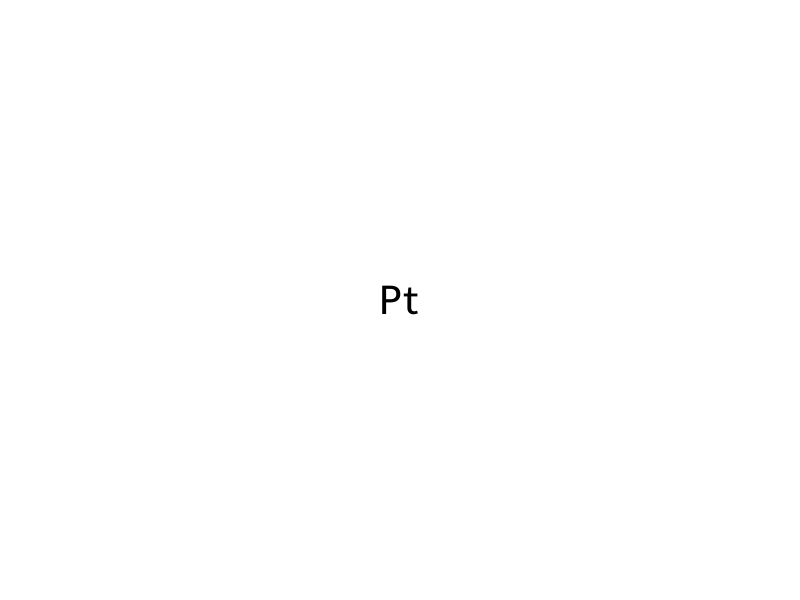
HCID 23939PlatinumKatalysatorHCID 6228DimethylformamideLösungsmittel

Versuchsvorschrift

A solution of the product of Example 38E (0.225 g, 1.015 mmol) in DMF was added to 5% Pt—C, wet (225 mg, 1.153 mmol) in a 50 ml pressure bottle. The mixture was pressurized with hydrogen (40 psi), stirred for 16 hours at ambient temperature, filtered to remove catalyst, and concentrated. The residue was chromatographed on silica gel eluting with 30% ethyl acetate-hexanes to give the title compound (90 mg, 40%). 1H NMR (300 MHz, DMSO-d6) δ ppm 8.55 (dd, J=1.5, 4.6, 1H), 7.91 (dd, J=1.5, 8.0, 1H), 7.36 (dd, J=4.6, 8.0, 1H), 2.96-2.77 (m, 2H), 2.26 (dd, J=5.4, 8.1, 4H), 2.03-1.84 (m, 2H), 1.46 (s, 3H). MS (DCI) m/z 224 (M+H)+.

Aufarbeitung

  1. filtrationfiltered
  2. customto remove catalyst
  3. concentrationconcentrated
  4. customThe residue was chromatographed on silica gel eluting with 30% ethyl acetate-hexanes

Quellen und Nachweise

ORD-Eintrag
ord-eea5fdaee85d4ff9ba9086fc684d83cc
Quelldatensatz
uspto-grants-2011_12
DOI
10.6084/m9.figshare.5104873.v1
Patentnummer
US08084616B2

Notizen zur Reaktion

Auf dieser SeiteKomponentenVersuchsvorschriftAufarbeitungQuellen und NachweiseNotizen zur Reaktion