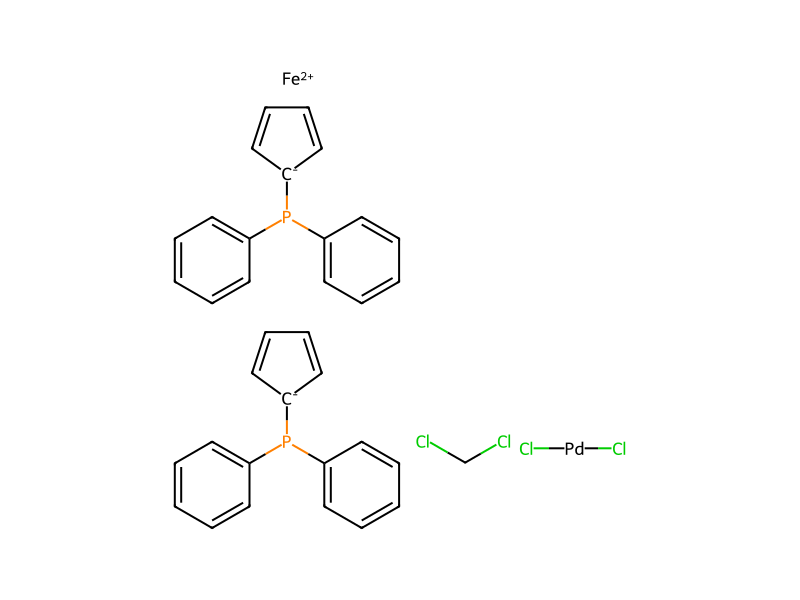
[NH2:1][C:2]1[C:3]([C:9]([O:11][CH3:12])=[O:10])=[N:4][C:5](Br)=[CH:6][CH:7]=1.[F:13][C:14]1[CH:19]=[CH:18][CH:17]=[C:16]([F:20])[C:15]=1B(O)O>C1C=CC(P(C2C=CC=CC=2)[C-]2C=CC=C2)=CC=1.C1C=CC(P(C2C=CC=CC=2)[C-]2C=CC=C2)=CC=1.Cl[Pd]Cl.[Fe+2].C(Cl)Cl.COCCOC>[NH2:1][C:2]1[C:3]([C:9]([O:11][CH3:12])=[O:10])=[N:4][C:5]([C:15]2[C:14]([F:13])=[CH:19][CH:18]=[CH:17][C:16]=2[F:20])=[CH:6][CH:7]=1A solution of methyl 3-amino-6-bromopicolinate (1.0 equiv.), 2,6-difluorophenyl-boronic acid (3.0 equiv), and Pd(dppf)Cl2-DCM (0.1 equiv.) in 3:1 DME/2M Na2CO3 (0.5M) was subjected to microwave irradiation at 120° C. for 15 min intervals. The reaction was filtered and washed with EtOAc. The organic was partitioned with H2O (25 mL), was further washed with NaCl(sat.) (25 mL), was dried over MgSO4, and the volatiles were removed in vacuo. The residue was diluted in EtOAc and passed through a silica gel plug and the volatiles were removed in vacuo yielding methyl 3-amino-6-(2,6-difluorophenyl)picolinate (47%). LCMS (m/z): 265.1 (MH+); LC Rt=2.70 min.
Wird geladen…