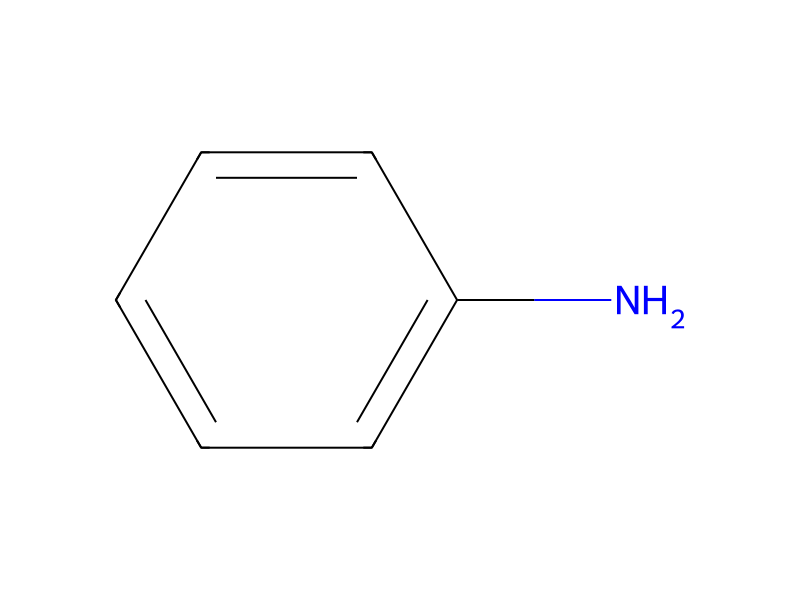
[NH2:1][C:2]1[CH:7]=[CH:6][CH:5]=[CH:4][CH:3]=1.C(N(CC)CC)C.[O:15]=[C:16]1[C:24]2[C:19](=[CH:20][CH:21]=[CH:22][CH:23]=2)[C:18](=[O:25])[N:17]1[CH2:26][C:27]1[CH:35]=[CH:34][C:30]([C:31](Cl)=[O:32])=[CH:29][CH:28]=1>ClCCl.CCCCCC>[O:25]=[C:18]1[C:19]2[C:24](=[CH:23][CH:22]=[CH:21][CH:20]=2)[C:16](=[O:15])[N:17]1[CH2:26][C:27]1[CH:35]=[CH:34][C:30]([C:31]([NH:1][C:2]2[CH:7]=[CH:6][CH:5]=[CH:4][CH:3]=2)=[O:32])=[CH:29][CH:28]=1Into a 500-mL 3-necked round-bottom flask purged and maintained with an inert atmosphere of nitrogen, was placed aniline (5.73 g, 61.53 mmol, 1.10 equiv), dichloromethane (100 mL) and triethylamine (11.3 g, 111.67 mmol, 2.00 equiv). This was followed by the addition of 4-[(1,3-dioxo-2,3-dihydro-1H-isoindol-2-yl)methyl]benzoyl chloride (16.7 g, 55.72 mmol, 1.00 equiv) in dichloromethane (100 mL) dropwise with stirring at 0° C. The resulting solution was stirred for 3 h at 25° C. The resulting solution was diluted with 100 mL of hexane. The solids were collected by filtration. The filter cake was washed with 2×50 mL of HCl (1 M), 2×50 mL of saturated aqueous Na2CO3 and 2×100 mL of water. This resulted in 14 g (71%) of 4-[(1,3-dioxo-2,3-dihydro-1H-isoindol-2-yl)methyl]-N-phenylbenzamide as a white solid. MS (ESI) m/z 357 ([M+H]+).