Pyrrolidine → 2-(Propan-2-yl)-5-(propan-2-ylidene)cyclopenta-1,3-diene
HRID 726156
Reaktionsgleichung

[CH:1]([C:4]1[CH2:8][CH:7]=[CH:6][CH:5]=1)([CH3:3])[CH3:2].N1C[CH2:12][CH2:11][CH2:10]1>CC(C)=O>[CH:1]([C:4]1[CH:8]=[CH:7][C:6](=[C:11]([CH3:12])[CH3:10])[CH:5]=1)([CH3:3])[CH3:2]Komponenten
4
Edukt 2
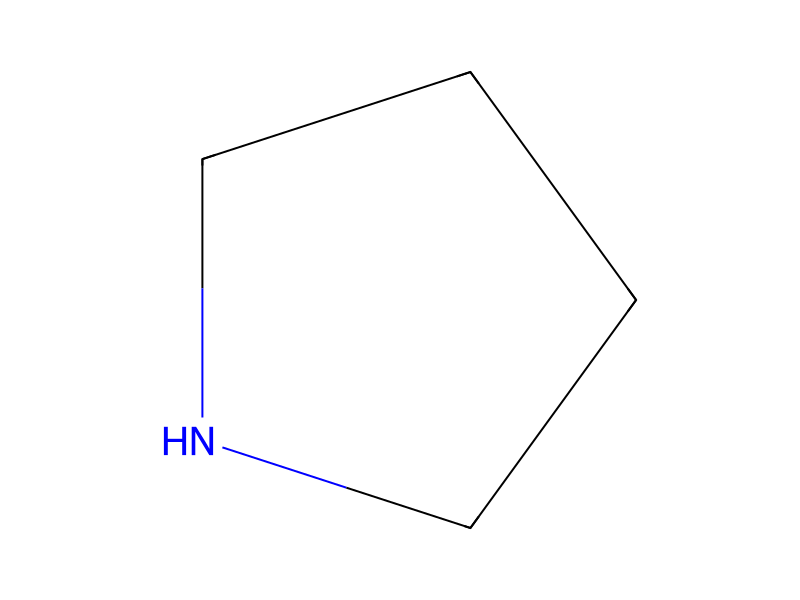

Produkt 1

Reagenzien, Katalysatoren, Lösungsmittel 1

Versuchsvorschrift
Therefore, 1,3-diisopropylcyclopentadiene was selected as the starting point for the synthesis. Unfortunately, the reported syntheses of 1,3-diisopropylcyclopentadiene gave low yields since the final step was always separation of the 1,3 product from the 1,2 product. A more selective method was found by extension of work by Nile in which he prepared a number of 1,3 disubstituted cyclopentadienes using a fulvene route. Using this method, reaction of isopropylcyclopentadiene with acetone catalyzed by pyrrolidine gave the 3-isopropyl-6,6-dimethylfulvene. Subsequent reduction of the fulvene with LAH and hydrolysis provided 1,3-diisopropylcyclopentadiene, "iPr2Cp." ##STR10##