Potassium Bromide → 2,5-bis(4-Bromophenyl)-3-(p-tolyloxy)furan
Reaktionsgleichung
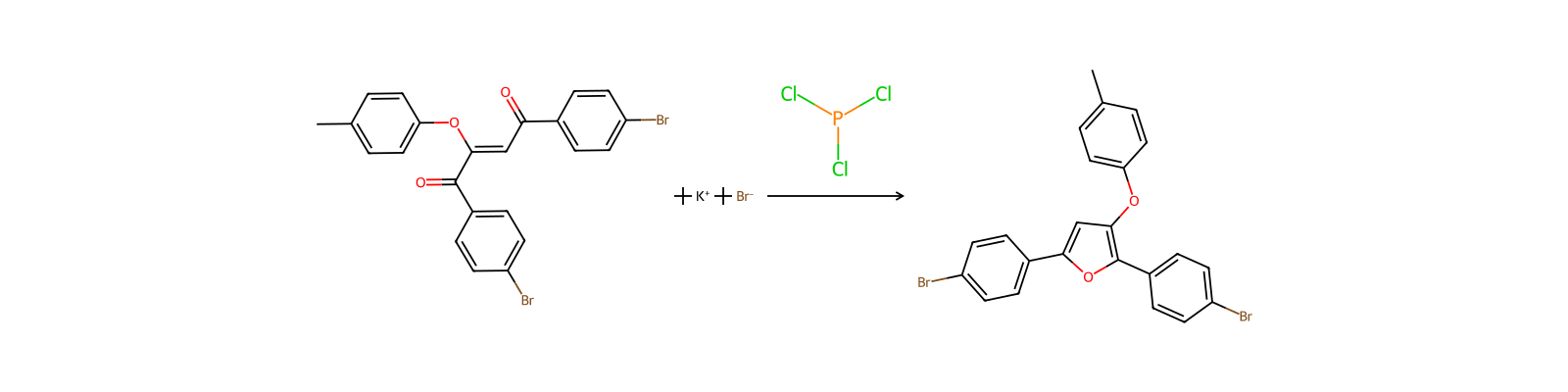
[C:1]1([CH3:28])[CH:6]=[CH:5][C:4]([O:7][C:8]([C:19](=O)[C:20]2[CH:25]=[CH:24][C:23]([Br:26])=[CH:22][CH:21]=2)=[CH:9][C:10](=[O:18])[C:11]2[CH:16]=[CH:15][C:14]([Br:17])=[CH:13][CH:12]=2)=[CH:3][CH:2]=1.[K+].[Br-]>P(Cl)(Cl)Cl>[Br:26][C:23]1[CH:22]=[CH:21][C:20]([C:19]2[O:18][C:10]([C:11]3[CH:12]=[CH:13][C:14]([Br:17])=[CH:15][CH:16]=3)=[CH:9][C:8]=2[O:7][C:4]2[CH:3]=[CH:2][C:1]([CH3:28])=[CH:6][CH:5]=2)=[CH:25][CH:24]=1Komponenten
4
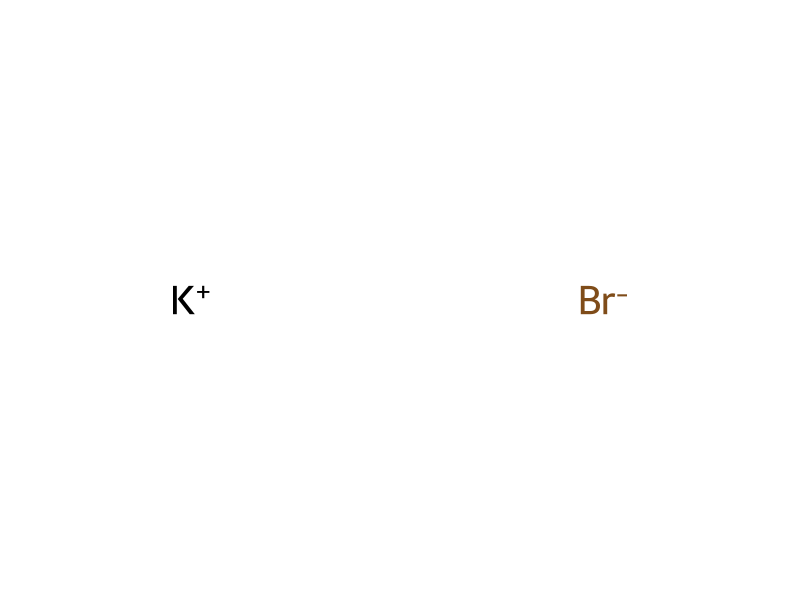
Edukt 2

Produkt 1

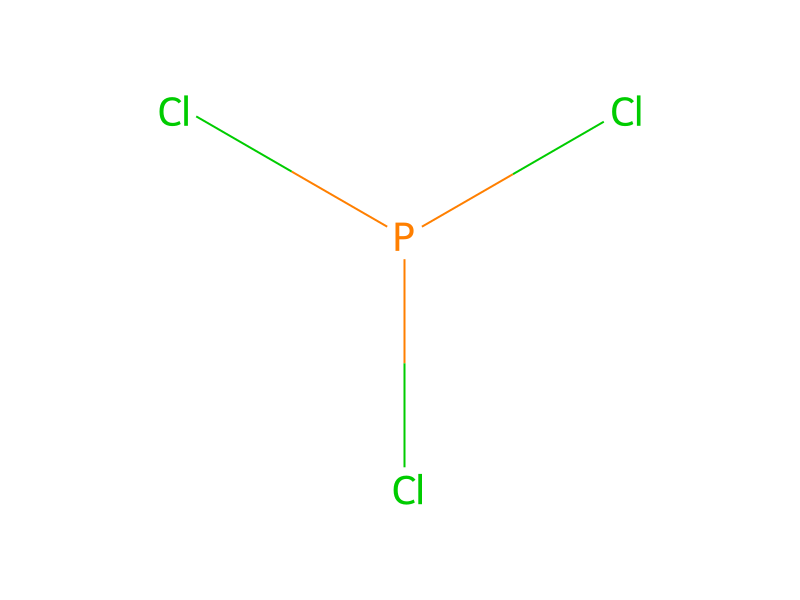
Reagenzien, Katalysatoren, Lösungsmittel 1
Versuchsvorschrift
A solution of 5.0 g (0.01 mole) 1-(4-tolyloxy)-1,2-bis-(4-bromobenzoyl)ethylene in 10 ml phosphorus trichloride was heated under reflux for 3-4 hr (TLC followed). The excess PCl3 was removed by distillation and the residue was triturated with ice/water (exothermic reaction). The solution was extracted with dichloromethane (75 ml) and the dichloromethane layer was washed with saturated sodium bicarbonate solution, water, and dried (Na2 SO4). The solvent was removed under reduced pressure. The residual solid was chromatographed over silica gel using ether:hexane (2:8 to 1:1) as eluant. An off white crystalline solid was obtained, 2.78 g (56%), mp 92°-3° C. IR (KBr) 2923, 2851, 1560, 1506, 1467, 1390, 1209, 1072, 1066, 945, 825, 707, 486. 1H NMR (CDCl3 /35° C.) 7.69 (d, 2H, J=8.8), 7.46-7.43 (m, 6H), 7.12 (d, 2H, J=8.3), 7.0 (d, 2H, J=8.3), 6.47 (s, 1H), 2.31 (s, 3H). 13C NMR (CDCl3 /135° C.) 150.8, 150.1, 142.8, 139.3, 133.0, 131.9, 131.7, 130.3, 129.1, 128.6, 125.1, 125.0, 121.8, 120.5, 117.1, 102.7, 20.6. MS m/e 484 (M+).