StartseiteMCPWorkbenchSkills
StartseiteWorkbenchBenachrichtigungenMein Bereich
llms.txt · MCP-AnleitungDatenschutz · Nutzungsbedingungen · Supportv1.8.0
  1. Startseite
  2. /Reaktion

Ethanol → 4-{[(2R)-2,3-Dihydroxypropyloxy]phenyl}butylamine

HRID 81327
Notizen
Druckvorschau

Reaktionsgleichung

Reaktionsgleichung von HRID 81327
O[C@H]([C@H](O)CO)CN(C[C@H](O)[C@H](O)CO)CCO[C:8]1[CH:13]=[CH:12][C:11]([CH2:14][CH2:15][CH2:16][CH2:17][NH2:18])=[CH:10][CH:9]=1.[CH2:30]([OH:32])[CH3:31].C(N(CC)CC)C.I.NC1C([C:50](NC(=N)SC)=[O:51])=NC(Cl)=C(N)N=1.C([O:61]C)(C)(C)C>>[OH:32][C@H:30]([CH2:50][OH:51])[CH2:31][O:61][C:10]1[CH:9]=[CH:8][CH:13]=[CH:12][C:11]=1[CH2:14][CH2:15][CH2:16][CH2:17][NH2:18]
KomponentenReaktionsbedingungenVersuchsvorschriftAufarbeitungQuellen und NachweiseNotizen zur Reaktion

Komponenten

6

Edukt 5

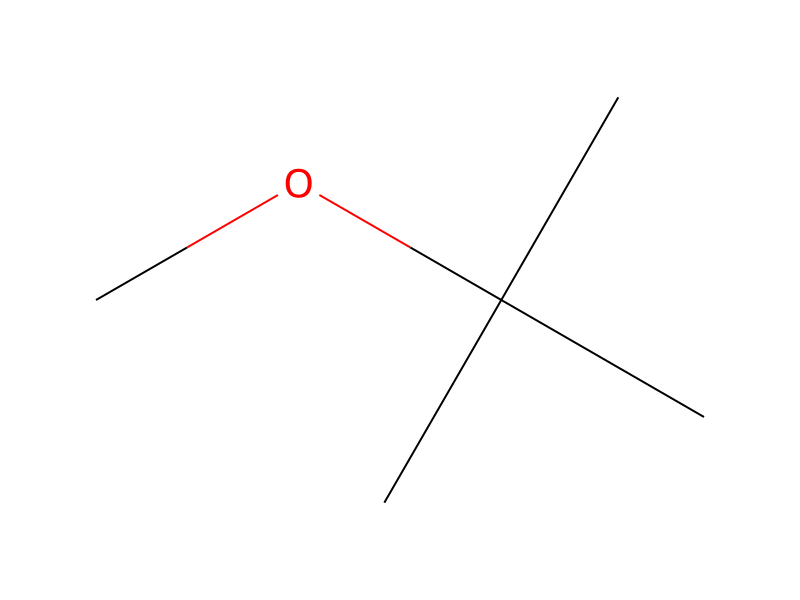
HCID 702EthanolHCID 8471TriethylamineHCID 15413tert-Butyl methyl etherHCID 67366654HCID 67366654, VerbindungHCID 140329753methyl N-(3,5-diamino-6-chloropyrazine-2-carbonyl)carbamimidothioate;hydroiodide

Produkt 1

HCID 67365743
4-{[(2R)-2,3-Dihydroxypropyloxy]phenyl}butylamine
Ausbeute 49 %

Reaktionsbedingungen

Temperatur
65 °C

Versuchsvorschrift

Compound 69 (0.112 g, 0.269 mmol) was mixed with ethanol (5 mL). The mixture was heated at 65° C. for 15 min to achieve complete dissolution. To the clear solution were sequentially added triethylamine (23 μL, 0.161 mmol) and 1-(3,5-diamino-6-chloropyrazinoyl)-2-methylisothiourea hydriodide (0.105 g, 0.269 mmol). The mixture was heated at 65° C. for an additional 2 hours. It was, while still warm, slowly added into methyl tert-butyl ether (MTBE, 25 mL) cooled by an ice bath. A light yellow precipitation immediately formed upon the addition of the reaction mixture. The suspension was allowed to warm up to room temperature by removing the ice bath, and the stirring was continued for one more hour. The solid was vacuum filtered, washed with MTBE (3×5 mL), and tried under vacuum for 4 hours. The dry material (0.155 g) was then suspended in ethanol (3 mL), and treated with concentrated HCl (1 mL). Water (3 mL) was added to completely dissolve the solid. The resulting solution was concentrated to dryness under vacuum. The residue was taken into methanol (2 mL). The resultant methanolic solution was added into 2-propyl alcohol (15 mL) at room temperature. The resulting light yellow suspension was stirred at room temperature overnight. The solid was then vacuum filtered, washed with 2-propyl alcohol (3×3 mL), and dried under vacuum. 0.093 g (49%) of the compound 70 was obtained as a light yellow solid. [α]D25=−13.9° (c 1.0, MeOH). 1H NMR (300 MHz, DMSO-d6) δ 1.46-1.68 (m, 4H), 2.50-2.57 (m, 2H), 3.26-3.70 (m, 15H), 3.88-4.98 (m, 2H), 4.35-4.72 (m, 2H), 4.98-5.10 (br s, 2H), 5.50-6.70 (br s, 2H), 6.93 (d, J=8.3 Hz, 2H), 7.16 (d, J=8.3 Hz, 2H), 7.45 (br s, 2H), 7.84-8.06 (br s, 1H), 8.61 (br s, 1H), 8.81 (br s, 1H), 8.94 (br s, 1H), 9.25 (br s, 1H), 10.51 (br s, 1H). m/z (APCI)=629 [C26H41ClN8O8+H]+.


Aufarbeitung

  1. dissolutiondissolution
  2. temperatureThe mixture was heated at 65° C. for an additional 2 hours
  3. temperaturewhile still warm
  4. temperaturecooled by an ice bath
  5. customA light yellow precipitation
  6. customimmediately formed upon the addition of the reaction mixture
  7. temperatureto warm up to room temperature
  8. customby removing the ice bath
  9. filtrationfiltered
  10. washwashed with MTBE (3×5 mL)
  11. additiontreated with concentrated HCl (1 mL)
  12. additionWater (3 mL) was added
  13. dissolutionto completely dissolve the solid
  14. concentrationThe resulting solution was concentrated to dryness under vacuum
  15. additionThe resultant methanolic solution was added into 2-propyl alcohol (15 mL) at room temperature
  16. filtrationvacuum filtered
  17. washwashed with 2-propyl alcohol (3×3 mL)
  18. customdried under vacuum

Quellen und Nachweise

ORD-Eintrag
ord-e1a4d0ed8cf148bc9a04ee22a2ff07e6
Quelldatensatz
uspto-grants-2014_09
DOI
10.6084/m9.figshare.5104873.v1
Patentnummer
US08846688B2

Notizen zur Reaktion

Wird geladen…

Auf dieser SeiteKomponentenReaktionsbedingungenVersuchsvorschriftAufarbeitungQuellen und NachweiseNotizen zur Reaktion