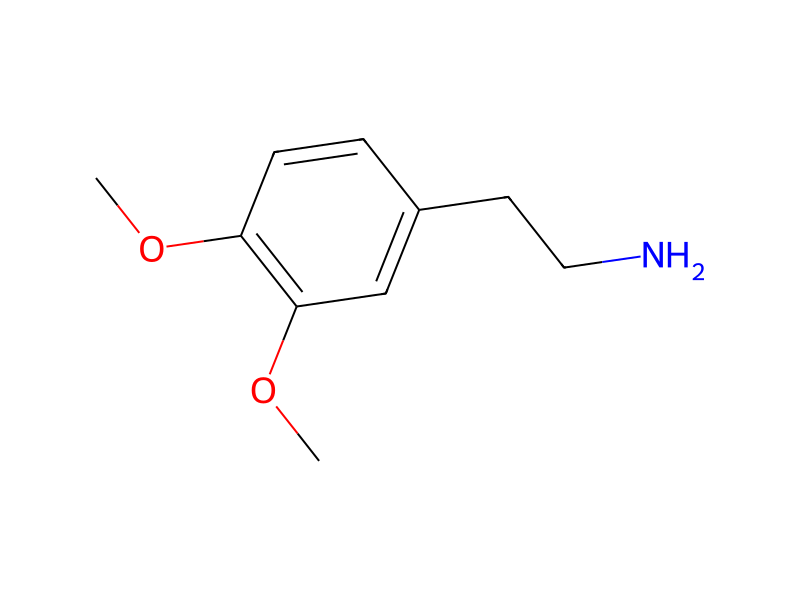
Homoveratrylamine → 2-(2-carbamoyl-5-chlorophenylamino)-N-(3,4-dimethoxyphenethyl)acetamide
HRID 848728
Reaktionsgleichung

[CH3:1][O:2][C:3]1[CH:4]=[C:5]([CH:9]=[CH:10][C:11]=1[O:12][CH3:13])[CH2:6][CH2:7][NH2:8].[C:14]([C:17]1[CH:22]=[CH:21][C:20]([Cl:23])=[CH:19][C:18]=1[NH:24][CH2:25][C:26](O)=[O:27])(=[O:16])[NH2:15]>C(Cl)(Cl)Cl>[C:14]([C:17]1[CH:22]=[CH:21][C:20]([Cl:23])=[CH:19][C:18]=1[NH:24][CH2:25][C:26]([NH:8][CH2:7][CH2:6][C:5]1[CH:9]=[CH:10][C:11]([O:12][CH3:13])=[C:3]([O:2][CH3:1])[CH:4]=1)=[O:27])(=[O:16])[NH2:15]Komponenten
4
Edukt 2

Produkt 1

Reagenzien, Katalysatoren, Lösungsmittel 1

Versuchsvorschrift
To 0.36 g of 3,4-dimethoxyphenethylamine was added 0.46 g of N-(2-carbamoyl-5-chlorophenyl)glycine and the mixture was stirred at 175° to 185° C. for 6 hours under nitrogen atmosphere. After cooling, the mixture was dissolved in 50 ml of chloroform and the chloroform solution was filtered to remove insoluble materials. The filtrate was washed with 5% hydrochloric acid, a 5% aqueous sodium carbonate solution and water and then dried. The solvent was evaporated in vacuo, and the residue was subjected to column chromatography on silica gel (15 g) and eluted with a mixture of chloroform and methanol (50:1 by volume). The eluate was concentrated to give 0.44 g of 2-(2-carbamoyl-5-chlorophenylamino)-N-(3,4-dimethoxyphenethyl)acetamide as colorless needles having a melting point of 167.5°-169° C.