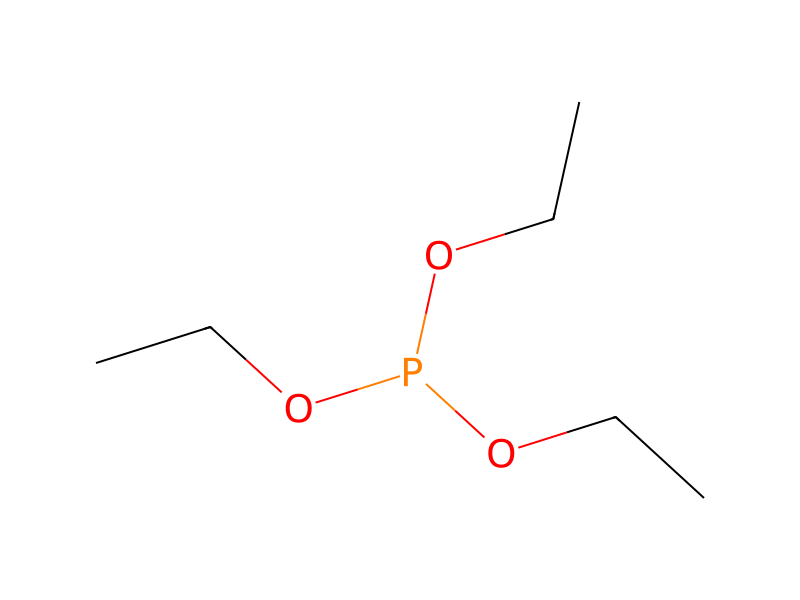
Triethyl phosphite → Phosphinecarboxylic acid, diethoxy-, 4-methoxyphenyl ester, oxide
Reaktionsgleichung

C([O:3][P:4]([O:8][CH2:9][CH3:10])[O:5][CH2:6][CH3:7])C.Cl[C:12]([O:14][C:15]1[CH:20]=[CH:19][C:18]([O:21][CH3:22])=[CH:17][CH:16]=1)=[O:13]>>[CH3:22][O:21][C:18]1[CH:19]=[CH:20][C:15]([O:14][C:12]([P:4](=[O:3])([O:5][CH2:6][CH3:7])[O:8][CH2:9][CH3:10])=[O:13])=[CH:16][CH:17]=1Komponenten
3


Reaktionsbedingungen
- Temperatur
- 120 °C
Versuchsvorschrift
18.6 g (0.12 mole) of triethylphosphite was heated at 125°-130° C. in a flask with a reflux condensor. 18.6 g (0.10 mole) of 4-methoxyphenyl chloroformate (prepared accordiang to M. J. Zabik and R. D. Schuetz, J. Org. Chem. 32 (1967) 300) was added dropwise. The reaction flask was heated additionally at about 120° C. for 1,5 hours and left at room temperature overnight. The product was distilled to give 25.8 g (89%) of diethyl 4-methoxyphenoxycarbonylphosphonate. Bp0.03 =174°-8° C., nD21 =1,4940.
Aufarbeitung
- distillationThe product was distilled
Quellen und Nachweise
- ORD-Eintrag
- ord-0401f9ca94ff43308310ac221b230ad1
- Quelldatensatz
- uspto-grants-1983_05
- Patentnummer
- US04386081
Notizen zur Reaktion
Wird geladen…