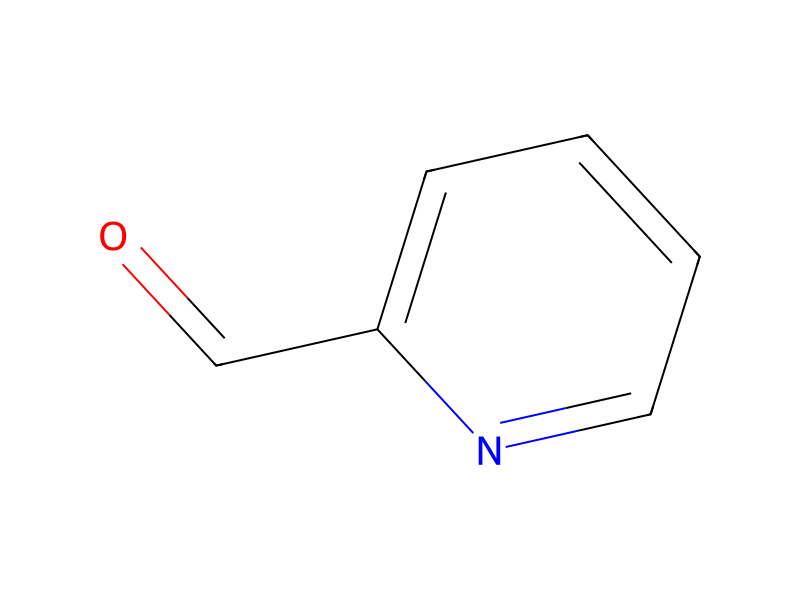
2-Pyridinecarboxaldehyde → 2-[2-(3,5-difluorophenyl)-2H-tetrazol-5-yl]pyridine
Reaktionsgleichung

ClC1C=C([N:8]2N=[N:11][C:10]([C:13]3[CH:18]=[CH:17][CH:16]=[CH:15][N:14]=3)=[N:9]2)C=CC=1.[F:19][C:20]1[CH:21]=[C:22]([CH:24]=[C:25]([F:27])[CH:26]=1)[NH2:23].N1C=CC=CC=1C=O>>[F:19][C:20]1[CH:21]=[C:22]([N:23]2[N:8]=[N:9][C:10]([C:13]3[CH:18]=[CH:17][CH:16]=[CH:15][N:14]=3)=[N:11]2)[CH:24]=[C:25]([F:27])[CH:26]=1Komponenten
4


Versuchsvorschrift
Following the procedure described in EXAMPLE 1 for the synthesis of 2-[2-(3-chlorophenyl)-2H-tetrazol-5-yl]pyridine, 3,5-difluoroaniline (131 mg, 1.0 mmol) and pyridine-2-carboxaldehyde (109 mg, 1.0 mmol) were employed to obtain 2-[2-(3,5-difluorophenyl)-2H-tetrazol-5-yl]pyridine as an orange solid.
Quellen und Nachweise
- ORD-Eintrag
- ord-9d56a992baa34cb0ac031f1ae4dae324
- Quelldatensatz
- uspto-grants-2007_08
- Patentnummer
- US07253190B2
Notizen zur Reaktion
Wird geladen…