Iodine → diethyl 4-(N,N-di-tolylamino)-benzylphosphonate
HRID 857817
Reaktionsgleichung

II.[C:3]1([CH3:25])[CH:8]=[CH:7][CH:6]=[CH:5][C:4]=1[N:9]([C:17]1[CH:24]=[CH:23][C:20]([CH2:21]O)=[CH:19][CH:18]=1)[C:10]1[CH:15]=[CH:14][CH:13]=[CH:12][C:11]=1[CH3:16].C([O:28][P:29]([O:33][CH2:34][CH3:35])[O:30][CH2:31][CH3:32])C>>[C:3]1([CH3:25])[CH:8]=[CH:7][CH:6]=[CH:5][C:4]=1[N:9]([C:17]1[CH:24]=[CH:23][C:20]([CH2:21][P:29](=[O:28])([O:30][CH2:31][CH3:32])[O:33][CH2:34][CH3:35])=[CH:19][CH:18]=1)[C:10]1[CH:15]=[CH:14][CH:13]=[CH:12][C:11]=1[CH3:16]Komponenten
4

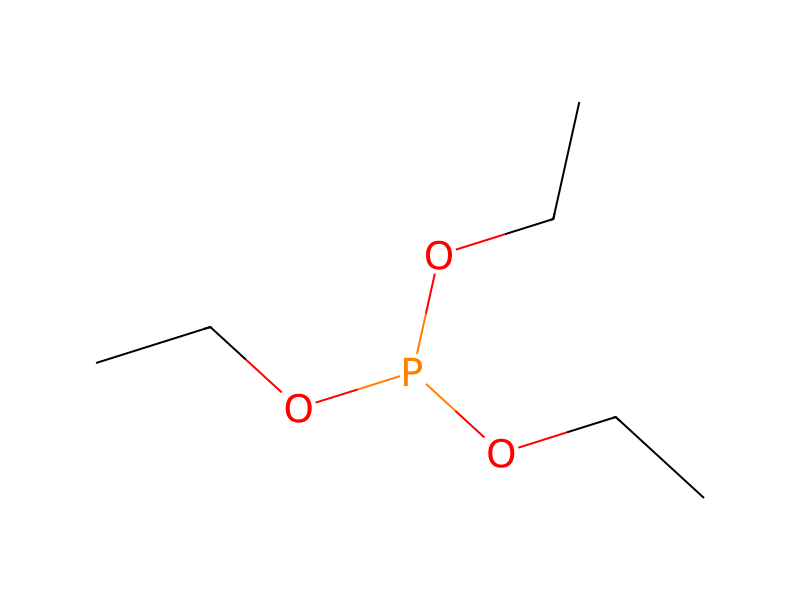


Reaktionsbedingungen
- Temperatur
- 25 °C
Versuchsvorschrift
Iodine (6.6 mmol) was added to a mixture of 4-(N,N-di-tolylamino)-benzyl alcohol (6.6 mmol) and triethylphosphite (10 mL) at 0° C. The reaction was allowed to warm to 25° C. and stirred for two hours. Excess triethylphosphite was distilled away from the reaction under reduced pressure, and the residue was partitioned between ether and water. The organic extracts were dried and concentrated to an oil, which was then purified by column chromatography to yield 1.6 g of diethyl 4-(N,N-di-tolylamino)-benzylphosphonate. The product was a pale, viscous oil. H1 NMR and mass spectra data were consistent with the structure.