StartseiteMCPWorkbenchSkills
StartseiteWorkbenchBenachrichtigungenMein Bereich
llms.txt · MCP-AnleitungDatenschutz · Nutzungsbedingungen · Supportv1.8.3
  1. Startseite
  2. /Reaktion

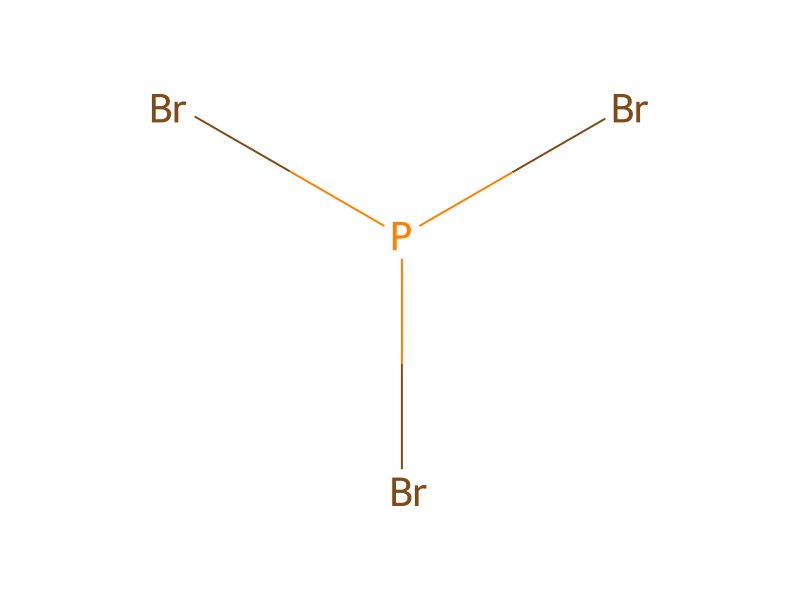
Phosphorus tribromide → 4-Bromo-1-(bromomethyl)-2-ethylbenzene

HRID 859671
Drucken

Reaktionsgleichung

Reaktionsgleichung von HRID 859671
[Br:1][C:2]1[CH:7]=[CH:6][C:5]([CH2:8]O)=[C:4]([CH2:10][CH3:11])[CH:3]=1.P(Br)(Br)[Br:13]>C(Cl)(Cl)Cl>[Br:1][C:2]1[CH:7]=[CH:6][C:5]([CH2:8][Br:13])=[C:4]([CH2:10][CH3:11])[CH:3]=1
KomponentenVersuchsvorschriftAufarbeitungQuellen und NachweiseNotizen zur Reaktion

Komponenten

4

Edukt 2

HCID 24614Phosphorus tribromideHCID 587642724-Bromo-2-ethylbenzenemethanol

Produkt 1

HCID 587640754-Bromo-1-(bromomethyl)-2-ethylbenzeneAusbeute 83 %

Reagenzien, Katalysatoren, Lösungsmittel 1

HCID 6212ChloroformLösungsmittel

Versuchsvorschrift

To a solution of (4-bromo-2-ethyl-phenyl)-methanol (7.9 g, 36.7 mmol) in anhydrous CHCl3 (122 mL) was added PBr3(4.2 mL, 44.1 mmol). The resulting mixture was stirred at room temperature for 2 hours before it was quenched by the addition of water. The organic layer was washed with NaHCO3, brine and dried over MgSO4. The solvent was removed in vacuo and the residue was filtered through a pad of silica gel with 20% EtOAc in hexanes. The solvent was removed in vacuo to afford the desired product (8.4 g, 83%). 1H NMR (300 MHz, CDCl3): δ 1.29 (t, J=7.5 Hz, 3 H), 2.71–2.78 (m, 2 H), 4.48 (s, 2H), 7.17–7.20 (m, 1H), 7.29–7.32 (m, 1 H), 7.36–7.38 (m, 1H).

Aufarbeitung

  1. customwas quenched by the addition of water
  2. washThe organic layer was washed with NaHCO3, brine
  3. dry with materialdried over MgSO4
  4. customThe solvent was removed in vacuo
  5. filtrationthe residue was filtered through a pad of silica gel with 20% EtOAc in hexanes
  6. customThe solvent was removed in vacuo

Quellen und Nachweise

ORD-Eintrag
ord-629c561ac52f44919310e17607ab23be
Quelldatensatz
uspto-grants-2006_12
DOI
10.6084/m9.figshare.5104873.v1
Patentnummer
US07151105B2

Notizen zur Reaktion

Auf dieser SeiteKomponentenVersuchsvorschriftAufarbeitungQuellen und NachweiseNotizen zur Reaktion