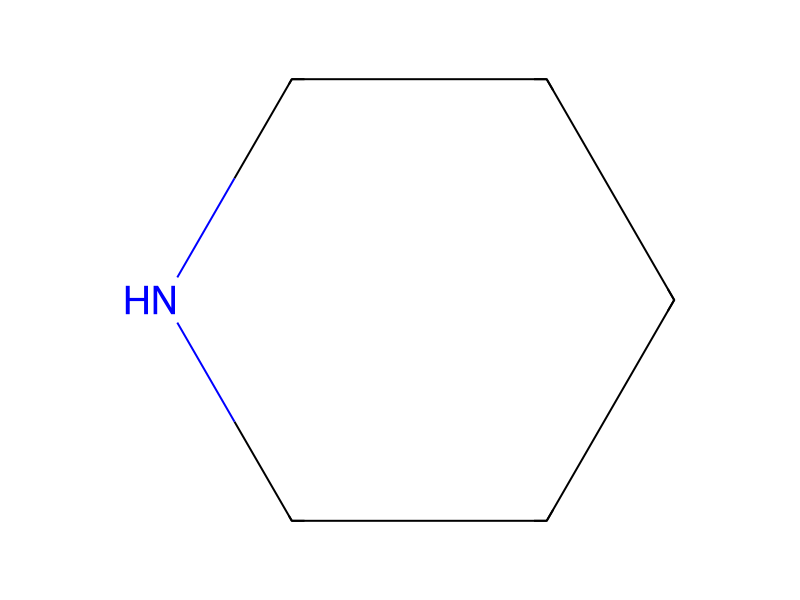
[CH3:1][S:2]([N:5]1[CH2:10][CH2:9][N:8]([C:11]2[CH:16]=[CH:15][C:14](Br)=[CH:13][CH:12]=2)[CH2:7][CH2:6]1)(=[O:4])=[O:3].[CH3:18][Si:19]([C:22]#[CH:23])([CH3:21])[CH3:20].C1(P(C2C=CC=CC=2)C2C=CC=CC=2)C=CC=CC=1>N1CCCCC1.[Cu]I.Cl[Pd](Cl)([P](C1C=CC=CC=1)(C1C=CC=CC=1)C1C=CC=CC=1)[P](C1C=CC=CC=1)(C1C=CC=CC=1)C1C=CC=CC=1>[CH3:1][S:2]([N:5]1[CH2:10][CH2:9][N:8]([C:11]2[CH:16]=[CH:15][C:14]([C:23]#[C:22][Si:19]([CH3:21])([CH3:20])[CH3:18])=[CH:13][CH:12]=2)[CH2:7][CH2:6]1)(=[O:4])=[O:3]To a stirred suspension of 1-(methylsulfonyl)-4-(4-bromophenyl)piperazine (4.79 g, 15 mmol, prepared as in example 3), trimethylsilylacetylene (4.15 mL, 30 mmol), Copper (I) iodide (31 mg, 0.17 mmol) and triphenylphosphine (80 mg, 0.3 mmol) in piperidine (60 mL) at 20° C. was added dichlorobis(triphenylphosphine)palladium(II) (31 mg, 45 μmol). The reaction was warmed to 105° C. and stirred for 8 hours under an inert atmosphere. After cooling, the suspension was filtered and washed with toluene. The solid was dissolved in CH2Cl2, washed with water and filtered through silica, washing with CH2Cl2. The filtrate was concentrated and the resulting suspension filtered, washing well with CH2Cl2/iHexane to give 1-(methylsulfonyl)-4-[4-(trimethylsilylethynyl)phenyl]piperazine as a white powder (3.05 g, 9.06 mmol, 60