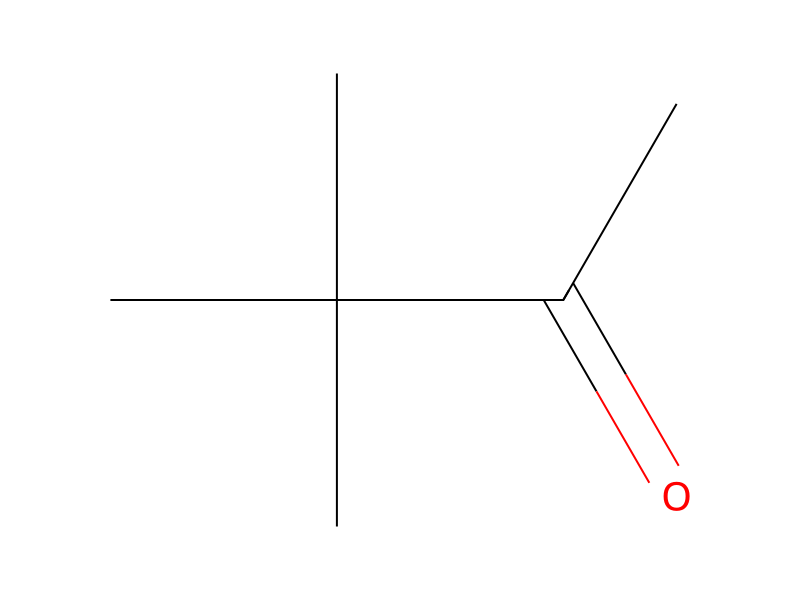
Pinacolone → 5,5-Dimethylhexane-2,4-dione
HRID 861807
Reaktionsgleichung

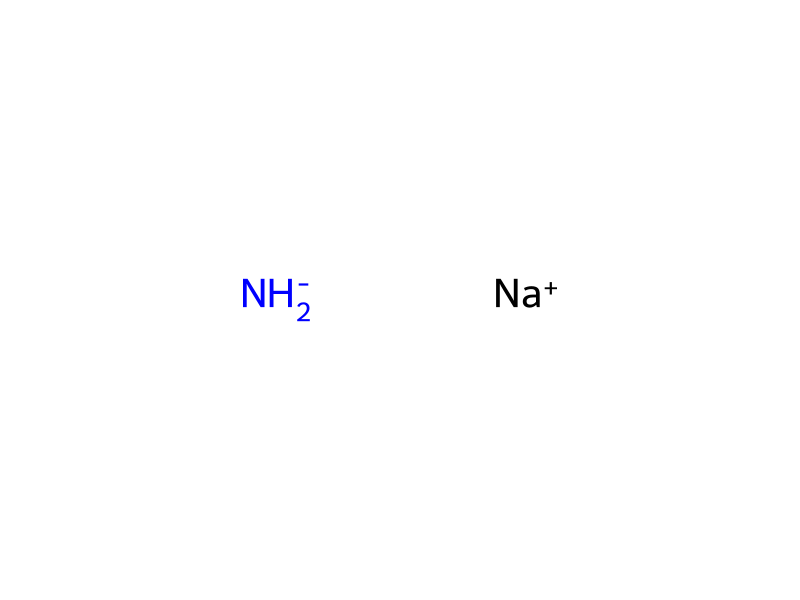
[C:1]([C:5]([CH3:7])=[O:6])([CH3:4])([CH3:3])[CH3:2].[NH2-].[Na+].[C:10](OCC)(=[O:12])[CH3:11]>>[CH3:2][C:1]([CH3:4])([CH3:3])[C:5](=[O:6])[CH2:7][C:10](=[O:12])[CH3:11]Komponenten
4


Versuchsvorschrift
Methyl t-butyl ketone was condensed with ethyl acetate in the presence of sodamide to yield 5,5-dimethyl-2,4-hexanedione. This material was reacted with phosphorus pentachloride to yield the divinyl chloride, which was in turn dehydrohalogenated with sodamide to give 5,5-dimethyl-1,3-hexadiyne. This alkyne was then dimerized using the procedure of Hay (see e.g. Hay, A. S., J. Org. Chem. 27, 3320 (1962)), using copper(I) chloride-tetramethylethylenediamine (TMEDA) complex as the catalyst, to yield the desired t-butyl endcapped tetrayne. The tetrayne melted at 99° C. and decomposed between 130° C. and 140° C. It is also stable to moderate pressures; exposure to 40 kbar pressure for one hour caused no changes in the IR spectrum, and at 60 kbar only about 2% graphitization was seen.