Salicyl Alcohol → (2-Hydroxybenzyl)triphenylphosphonium bromide
Reaktionsgleichung

[OH:1][C:2]1[CH:9]=[CH:8][CH:7]=[CH:6][C:3]=1[CH2:4]O.[BrH:10].[C:11]1([P:17]([C:24]2[CH:29]=[CH:28][CH:27]=[CH:26][CH:25]=2)[C:18]2[CH:23]=[CH:22][CH:21]=[CH:20][CH:19]=2)[CH:16]=[CH:15][CH:14]=[CH:13][CH:12]=1>C(#N)C>[Br-:10].[OH:1][C:2]1[CH:9]=[CH:8][CH:7]=[CH:6][C:3]=1[CH2:4][P+:17]([C:18]1[CH:19]=[CH:20][CH:21]=[CH:22][CH:23]=1)([C:24]1[CH:29]=[CH:28][CH:27]=[CH:26][CH:25]=1)[C:11]1[CH:12]=[CH:13][CH:14]=[CH:15][CH:16]=1Komponenten
4
Edukt 2

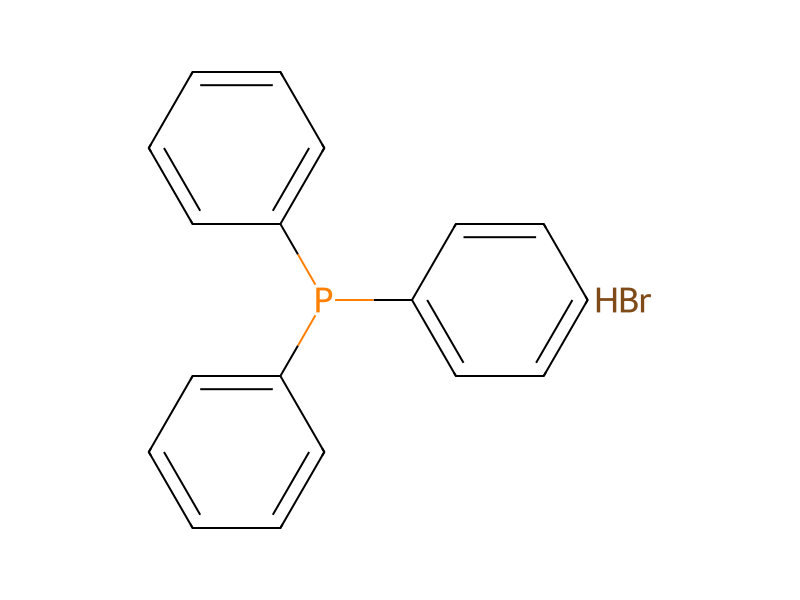
Produkt 1

Reagenzien, Katalysatoren, Lösungsmittel 1

Versuchsvorschrift
2-Hydroxybenzyl alcohol was treated with triphenylphosphine hydrobromide in acetonitrile as described in Example 1 to yield [(2-Hydroxyphenyl)methyl]triphenylphosphonium bromide.
Quellen und Nachweise
- ORD-Eintrag
- ord-406ac17751a64f67938fc22260fe66f2
- Quelldatensatz
- uspto-grants-1988_10
- Patentnummer
- US04780251
Notizen zur Reaktion
Wird geladen…