Reaktionsgleichung

[S-2:1].[Li+:2].[Li+:3].[P:4]12([S:16][P:14]3([S:17][P:7]([S:9][P:10]([S:13]3)([S:12]1)=[S:11])(=[S:8])[S:6]2)=[S:15])=[S:5]>>[S:1]([Li:3])[Li:2].[P:4]12([S:6][P:7]3([S:9][P:10]([S:13][P:14]([S:17]3)([S:16]1)=[S:15])(=[S:11])[S:12]2)=[S:8])=[S:5]Komponenten
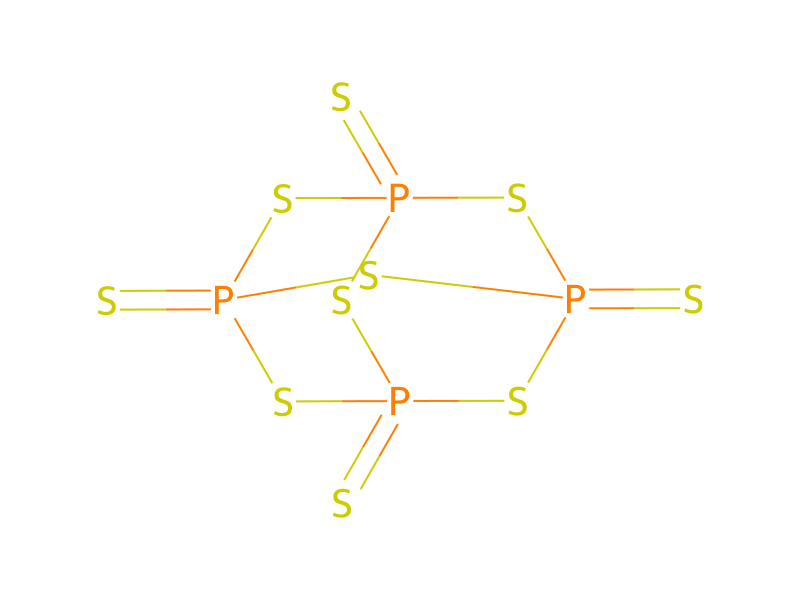


Versuchsvorschrift
Lithium sulfide (Li2S) and phosphorus pentasulfide (P2S5) were used as a starting material. These powders were weighed in a glove box under an Ar atmosphere (dew point: −70° C.) so as to become a molar ratio of 73.5Li2S.26.5P2S5, and mixed by an agate mortar to obtain a raw material composition of 1 g (Li2S=0.3644 g, P2S5=0.6356 g). Next, 1 g of the obtained raw material composition was projected into a 45-ml zirconia pot, and zirconia ball (φ=10 mm, 10 pieces) was further projected thereinto to hermetically seal the pot completely (Ar atmosphere). This pot was mounted on a planetary ball milling machine (P7™ manufactured by FRITSCH JAPAN CO., LTD.) to perform mechanical milling for 40 hours at the number of rotating table revolutions of 370 rpm and then obtain a sulfide solid electrolyte glass.
Aufarbeitung
- customThese powders were weighed in a glove box under an Ar atmosphere (dew point: −70° C.)
- additionmixed by an agate mortar
Quellen und Nachweise
- ORD-Eintrag
- ord-794bae3487ee410ea1d45d21a3e1bb27
- Quelldatensatz
- uspto-grants-2015_03
- Patentnummer
- US08993176B2
Verknüpfte Notizen
Wird geladen…