StartseiteMCPWorkbenchSkills
StartseiteWorkbenchBenachrichtigungenMein Bereich
llms.txt · MCP-AnleitungDatenschutz · Nutzungsbedingungen · Supportv1.8.3
  1. Startseite
  2. /Reaktion

8-Hydroxyquinoline → 8,8'-Oxydiquinoline

HRID 886767
Drucken

Reaktionsgleichung

Reaktionsgleichung von HRID 886767
C(=O)([O-])[O-].[Cs+].[Cs+].Br[C:8]1[CH:9]=[CH:10][CH:11]=[C:12]2[C:17]=1[N:16]=[CH:15][CH:14]=[CH:13]2.[OH:18][C:19]1[CH:20]=[CH:21][CH:22]=[C:23]2[C:28]=1[N:27]=[CH:26][CH:25]=[CH:24]2.C(N(CC([O-])=O)CC(O)=O)CN(CC([O-])=O)CC(O)=O.[Na+].[Na+]>CN(C=O)C.C(Cl)Cl>[O:18]([C:19]1[CH:20]=[CH:21][CH:22]=[C:23]2[C:28]=1[N:27]=[CH:26][CH:25]=[CH:24]2)[C:8]1[CH:9]=[CH:10][CH:11]=[C:12]2[C:17]=1[N:16]=[CH:15][CH:14]=[CH:13]2
KomponentenVersuchsvorschriftAufarbeitungQuellen und NachweiseNotizen zur Reaktion

Komponenten

7

Edukt 4

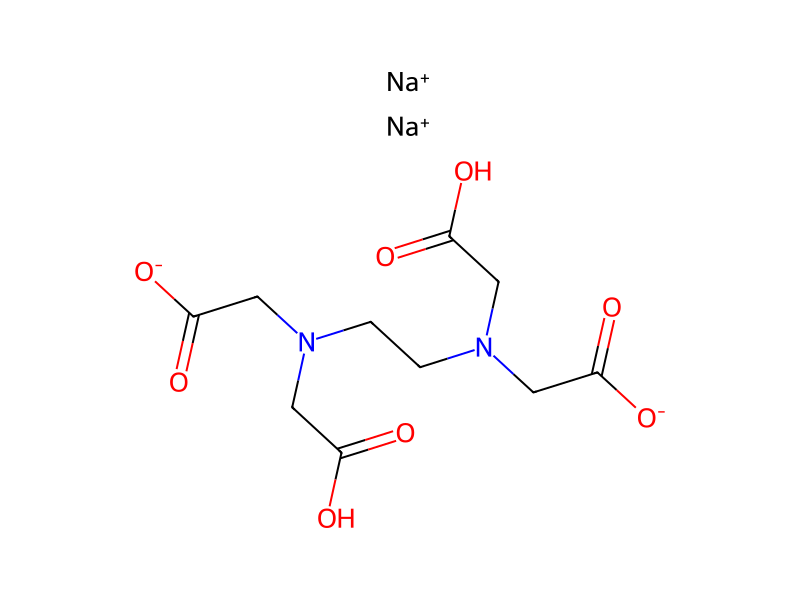
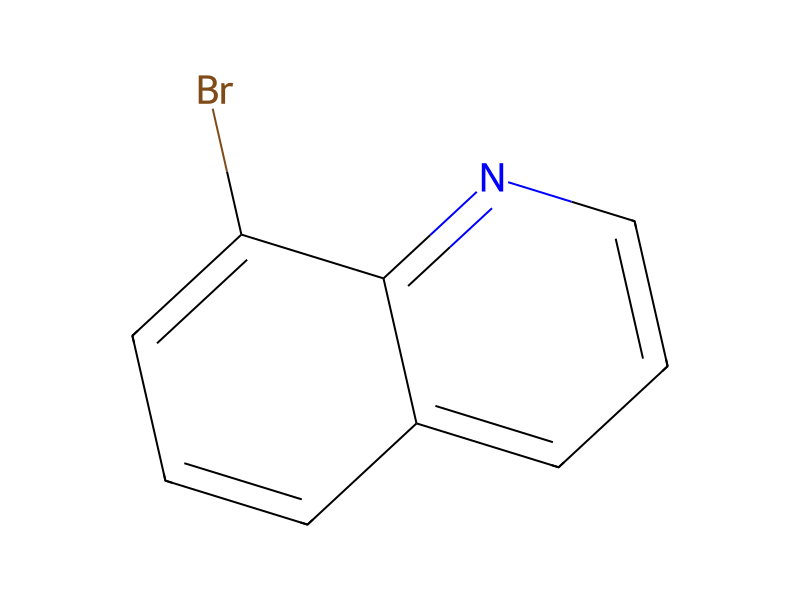
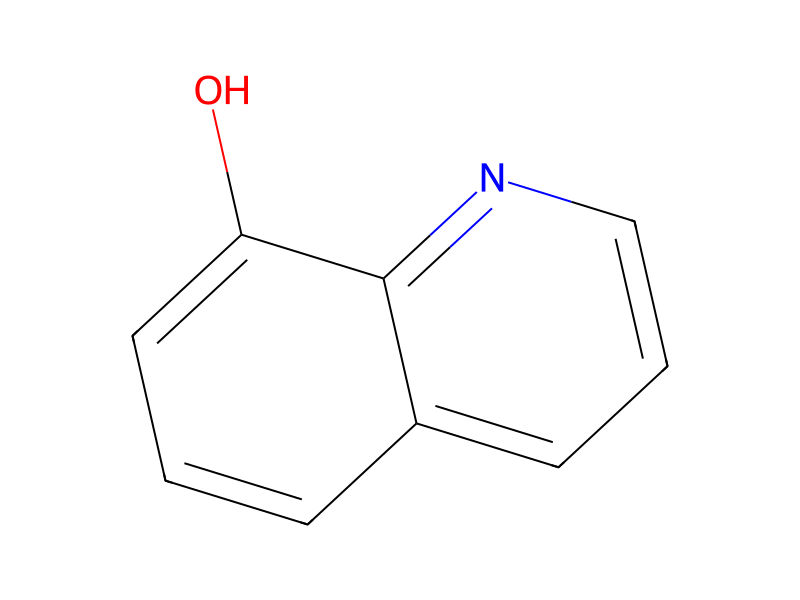
HCID 19238-HydroxyquinolineHCID 8759Ethylenediaminetetraacetic acid disodium saltHCID 10796Cesium carbonateHCID 1401098-Bromoquinoline

Produkt 1

HCID 184060798,8'-OxydiquinolineAusbeute 19 %

Reagenzien, Katalysatoren, Lösungsmittel 2

HCID 6228
Dimethylformamide
Lösungsmittel
HCID 6344DichloromethaneLösungsmittel

Versuchsvorschrift

The product has already been described in: V. M. Dziomko et al., Yakugaku Zasshi 1951, 71, 452-455; but using a different method of synthesis. Caesium carbonate (156 mg; 0.48 mmol), 8-bromoquinoline (32 μl; 50 mg; 0.24 mmol) and CuCl2.2H2O (4.1 mg; 0.024 mmol) are added to a solution under argon of 8-hydroxyquinoline (71 mg; 0.49 mmol) in 2.0 ml of dry DMF. The mixture is heated under reflux for 72 hours. After cooling, 5 ml of CH2Cl2 and 5 ml of a 0.12 M aqueous solution of EDTA disodium salt are added. The organic phase is recovered and the aqueous phase is subsequently extracted with CH2Cl2 (2×5 ml). The organic phases are combined and washed once with 5 ml of 0.12 M EDTA in H2O then in water. The volume is reduced under reduced pressure then the reaction crude product is purified by silica gel chromatography, eluted with a gradient of 50 to 100% of ethyl acetate in toluene (v/v) then with 100% of CH3OH and the solvent is evaporated to recover 15, from the methanol phase, in the form of a white powder (13 mg; 0.046 mmol, yield=19%). NMR-1H (250 MHz, CDCl3) δ, ppm: 8.95 (dd, 3J (H, H)=4.0 Hz, 4J (H, H)=1.5 Hz, 2H); 8.21 (dd, 3J (H, H)=8.5 Hz, 4J (H, H)=1.5 Hz, 2H); 7.61 (dd, 3J (H, H)=8.0 Hz, 4J (H, H)=1.0 Hz, 2H); 7.46 (dd, 3J (H, H)=4.0 Hz and 8.5 Hz, 2H); 7.42 (dd, 3J (H, H)=7.5 Hz and 8.0 Hz, 2H); 7.14 (dd, 3J (H, H)=7.5 Hz, 4J (H, H)=1.0 Hz, 2H). MS (CID, NH3): m/z=273 (MH+). UV/vis [CH3OH/20 mM Tris-HCl pH=7.4 containing 150 mM NaCl (1/1, v/v)]: λ nm (ε M−1 cm−1)=232 (53,300), 240 (42,900), 2994 (9,400), 327 (5,800, shoulder).

Aufarbeitung

  1. customa different method of synthesis
  2. temperatureThe mixture is heated
  3. temperatureunder reflux for 72 hours
  4. temperatureAfter cooling
  5. customThe organic phase is recovered
  6. extractionthe aqueous phase is subsequently extracted with CH2Cl2 (2×5 ml)
  7. washwashed once with 5 ml of 0.12 M EDTA in H2O
  8. customthe reaction crude product
  9. customis purified by silica gel chromatography
  10. washeluted with a gradient of 50 to 100% of ethyl acetate in toluene (v/v)
  11. customwith 100% of CH3OH and the solvent is evaporated
  12. customto recover 15
  13. additionUV/vis [CH3OH/20 mM Tris-HCl pH=7.4 containing 150 mM NaCl (1/1

Quellen und Nachweise

ORD-Eintrag
ord-3f3eec06abeb48219272afb85337516e
Quelldatensatz
uspto-grants-2012_08
DOI
10.6084/m9.figshare.5104873.v1
Patentnummer
US08247396B2

Notizen zur Reaktion

Auf dieser SeiteKomponentenVersuchsvorschriftAufarbeitungQuellen und NachweiseNotizen zur Reaktion