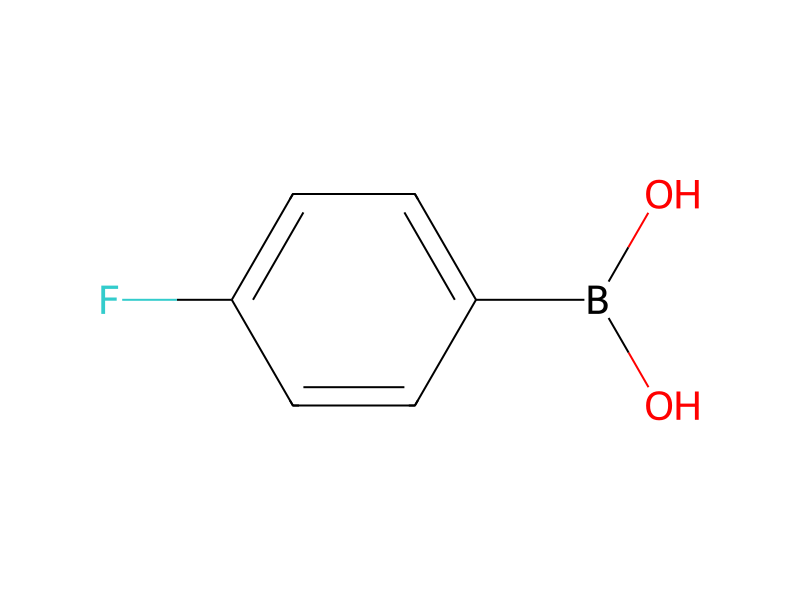
[NH2:1][C:2]1[C:3]([C:13]([OH:15])=[O:14])=[N:4][C:5](Br)=[C:6]([C:8]([F:11])([F:10])[F:9])[CH:7]=1.[F:16][C:17]1[CH:22]=[CH:21][C:20](B(O)O)=[CH:19][CH:18]=1.C([O-])([O-])=O.[Cs+].[Cs+]>C1COCC1>[NH2:1][C:2]1[C:3]([C:13]([OH:15])=[O:14])=[N:4][C:5]([C:20]2[CH:21]=[CH:22][C:17]([F:16])=[CH:18][CH:19]=2)=[C:6]([C:8]([F:11])([F:10])[F:9])[CH:7]=1A mixture comprising 3-amino-6-bromo-5-trifluoromethyl-pyridine-2-carboxylic acid (Intermediate A) (1 g, 3.51 mmol), 4-fluorophenylboronic acid (0.736 g, 5.26 mmol) and 1,1′Bis(diphenylphosphoshio)ferrocene palladium dichloride (0.286 g, 0.351 mmol) and 1.0M Cs2CO3 (3.3 ml) in THF (10 ml) was heated to reflux for 10 hours. After cooling to RT, the mixture was partitioned between DCM (100 ml) and 1 M NaOH (2×100 ml). The aqueous phase was acidified with 5M HCl and the resulting milky solution was extracted into DCM (2×100 ml). The organic portion was separated, dried (MgSO4) and concentrated in vacuo to afford the product as a crude oil. The crude material was purified by flash chromatography on silica cartridge eluting with a gradient of DCM: MeOH from 0% to 10% MeOH to afford the title product as a pale yellow solid;