Reaktionsgleichung

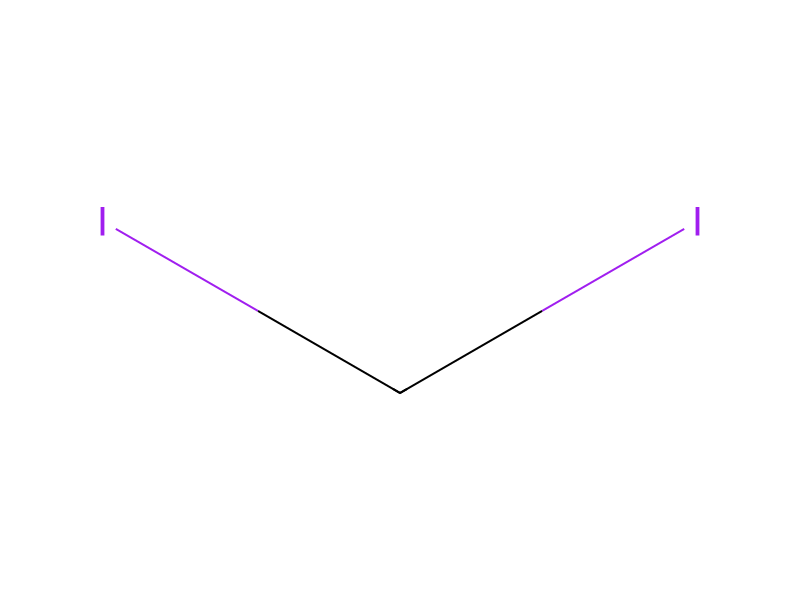
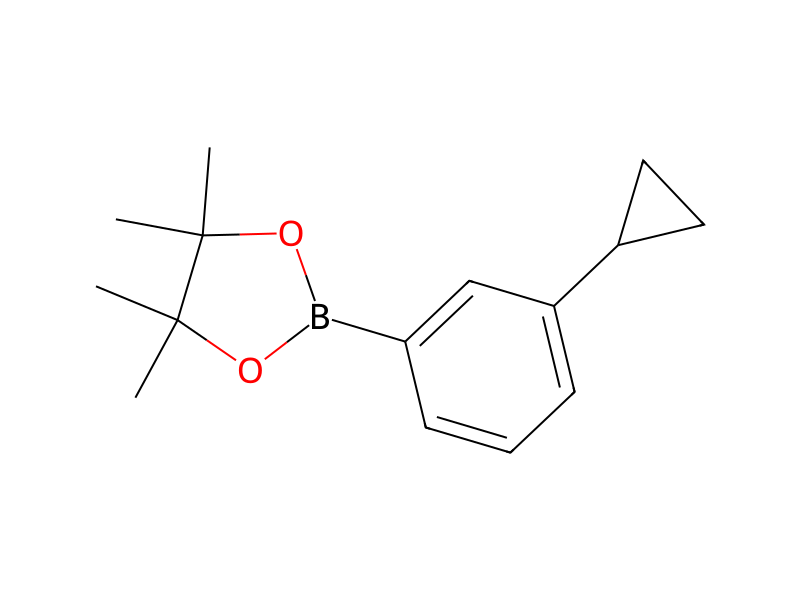
[CH3:1][C:2]1([CH3:17])[C:6]([CH3:8])([CH3:7])[O:5][B:4]([C:9]2[CH:14]=[CH:13][CH:12]=[C:11]([CH:15]=[CH2:16])[CH:10]=2)[O:3]1.[CH2:18]([Zn]CC)C.ICI.[NH4+].[Cl-]>C1(C)C=CC=CC=1>[CH:15]1([C:11]2[CH:10]=[C:9]([B:4]3[O:3][C:2]([CH3:17])([CH3:1])[C:6]([CH3:7])([CH3:8])[O:5]3)[CH:14]=[CH:13][CH:12]=2)[CH2:18][CH2:16]1Komponenten
6
Edukt 4



Produkt 1
Reagenzien, Katalysatoren, Lösungsmittel 1

Versuchsvorschrift
To a solution of 4,4,5,5-tetramethyl-2-(3-vinyl-phenyl)-[1,3,2]dioxaborolane (300 mg, 1.3 mmol) in toluene (10 ml) were added diethylzinc solution (1.1 N in toluene, 5.22 ml, 5.74 mmol) and diiodomethane (8.7 ml, 33 mmol). The reaction mixture was stirred for 1 hour at room temperature and then refluxed for 3 hours. The reaction mixture was poured on sat. NH4Cl solution (20 ml) and was extracted with ethyl acetate. The combined organic layers were washed with brine, dried over MgSO4, filtered and concentrated in vacuo to provide 2-(3-cyclopropyl-phenyl)-4,4,5,5-tetramethyl-[1,3,2]dioxaborolane (69% yield), 1H-NMR (300 MHz, CDCl3): δ=7.12-7.82 (m, 4H), 1.35 (s, 12H), 1.28 (t, 1H), 0.90-0.96 (m, 2H), 0.72-0.78 (m, 2H).
Aufarbeitung
- temperaturerefluxed for 3 hours
- extractionwas extracted with ethyl acetate
- washThe combined organic layers were washed with brine
- dry with materialdried over MgSO4
- filtrationfiltered
- concentrationconcentrated in vacuo
Quellen und Nachweise
- ORD-Eintrag
- ord-16faa739c8524138aadf0fb8526258e3
- Quelldatensatz
- uspto-grants-2006_02
- Patentnummer
- US07005432B2
Verknüpfte Notizen
Wird geladen…