StartseiteMCPWorkbenchSkills
StartseiteWorkbenchBenachrichtigungenMein Bereich
llms.txt · MCP-AnleitungDatenschutz · Nutzungsbedingungen · Supportv1.8.3
  1. Startseite
  2. /Reaktion

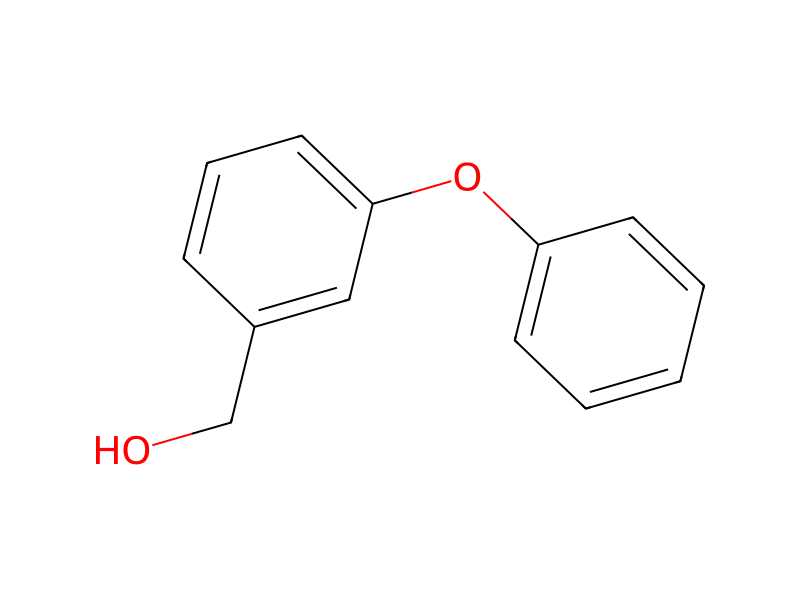
3-Phenoxybenzyl alcohol → (2-Bromo-5-phenoxyphenyl)methanol

HRID 897511
Drucken

Reaktionsgleichung

Reaktionsgleichung von HRID 897511
[O:1]([C:8]1[CH:9]=[C:10]([CH2:14][OH:15])[CH:11]=[CH:12][CH:13]=1)[C:2]1[CH:7]=[CH:6][CH:5]=[CH:4][CH:3]=1.[Br:16]N1C(=O)CCC1=O>C(#N)C>[Br:16][C:11]1[CH:12]=[CH:13][C:8]([O:1][C:2]2[CH:3]=[CH:4][CH:5]=[CH:6][CH:7]=2)=[CH:9][C:10]=1[CH2:14][OH:15]
KomponentenVersuchsvorschriftAufarbeitungQuellen und NachweiseNotizen zur Reaktion

Komponenten

4

Edukt 2

HCID 262953-Phenoxybenzyl alcoholHCID 67184N-bromobutanimide

Produkt 1

HCID 22346758(2-Bromo-5-phenoxyphenyl)methanolAusbeute 85 %

Reagenzien, Katalysatoren, Lösungsmittel 1

HCID 6342AcetonitrileLösungsmittel

Versuchsvorschrift

To a solution of 3-phenoxyphenyl methanol (4.0 g, 0.020 mol) in anhydrous acetonitrile was added 1-bromo-2,5-pyrrolidinedione (3.73 g, 0.021 mol) at room temperature. The mixture was stirred at room temperature for one and a half hour under an atmosphere of nitrogen. The solvents were removed under the reduced pressure. Tetrachloromethane (100 mL) was added to the residue, and the mixture was filtered. The filtrate was concentrated into the residue, and the residue was purified by flash chromatography on silica gel using ethyl acetate/n-heptane (1:5) as mobile phase to yield (2-bromo-5-phenoxyphenyl)methanol (4.7 g, 0.017 mol):

Aufarbeitung

  1. customThe solvents were removed under the reduced pressure
  2. additionTetrachloromethane (100 mL) was added to the residue
  3. filtrationthe mixture was filtered
  4. concentrationThe filtrate was concentrated into the residue
  5. customthe residue was purified by flash chromatography on silica gel

Quellen und Nachweise

ORD-Eintrag
ord-4c6e8c4653174f90ad0e7c0236601317
Quelldatensatz
uspto-grants-2005_07
DOI
10.6084/m9.figshare.5104873.v1
Patentnummer
US06921763B2

Notizen zur Reaktion

Auf dieser SeiteKomponentenVersuchsvorschriftAufarbeitungQuellen und NachweiseNotizen zur Reaktion