Reaktionsgleichung

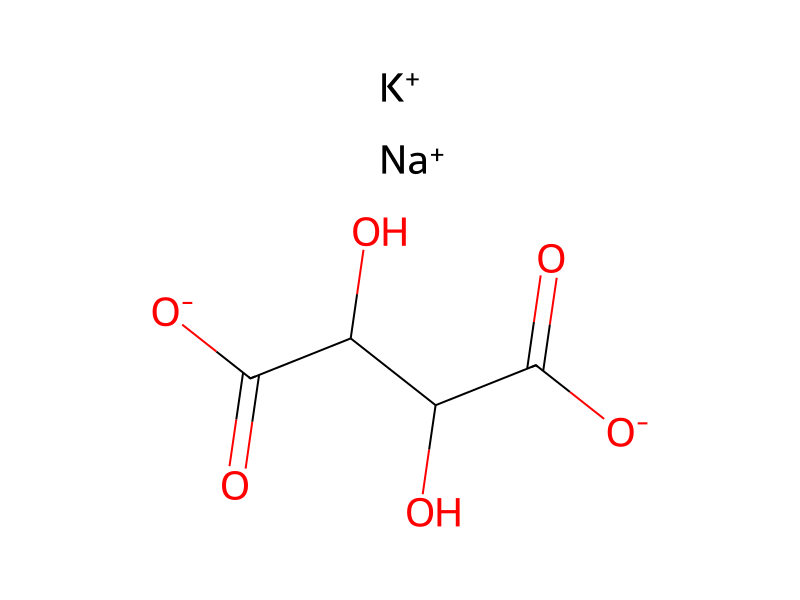
C[O:2][C:3](=O)[C:4]1[CH:9]=[CH:8][C:7]([C:10]2[O:11][C:12]([C:15]3[CH:20]=[CH:19][CH:18]=[CH:17][CH:16]=3)=[CH:13][N:14]=2)=[CH:6][CH:5]=1.CC(C[AlH]CC(C)C)C.C(C(C(C([O-])=O)O)O)([O-])=O.[K+].[Na+]>C(Cl)Cl>[OH:2][CH2:3][C:4]1[CH:5]=[CH:6][C:7]([C:10]2[O:11][C:12]([C:15]3[CH:16]=[CH:17][CH:18]=[CH:19][CH:20]=3)=[CH:13][N:14]=2)=[CH:8][CH:9]=1Komponenten
Edukt 3


Produkt 1

Reagenzien, Katalysatoren, Lösungsmittel 1

Reaktionsbedingungen
- Temperatur
- -78 °C
Versuchsvorschrift
To a solution of methyl-4-(5-phenyloxazol-2-yl)-benzoate (56 mg, 0.19 mmol) in CH2Cl2 (8 mL) at −78° C. was added DIBAL-H (1 mL of a 1.0 M solution in CH2Cl2, 1.0 mmol) and the solution stirred at −78° C. for 90 min. A saturated aqueous solution of sodium potassium tartrate (5 mL) was added to the reaction and the mixture allowed to warm to room temperature. The bi-phasic mixture was stirred rapidly for 60 min, the layers separated and the aqueous layer was extracted with CH2Cl2 (2×10 mL). The combined organic fractions were dried (Na2SO4), filtered and concentrated in vacuo to afford the desired alcohol, 2-(4-hydroxymethylphenyl)-5-phenyloxazole, as a pale yellow oil (46 mg, 96%). 1H NMR (CDCl3) δ 3.41 (t, 1H (OH), J=7.0 Hz), 4.77 (d, 2H, J=7.0 Hz), 7.33 (m, 1H), 7.45 (m, 5H), 7.72 (d, 2H, J=6.4 Hz), 8.08 (d, 2H, J=8.1 Hz).
Aufarbeitung
- temperatureto warm to room temperature
- stirringThe bi-phasic mixture was stirred rapidly for 60 min
- customthe layers separated
- extractionthe aqueous layer was extracted with CH2Cl2 (2×10 mL)
- dry with materialThe combined organic fractions were dried (Na2SO4)
- filtrationfiltered
- concentrationconcentrated in vacuo
Quellen und Nachweise
- ORD-Eintrag
- ord-a13f63122e0f4a9ca6968c438395a964
- Quelldatensatz
- uspto-grants-2006_08
- Patentnummer
- US07091217B2
Verknüpfte Notizen
Wird geladen…