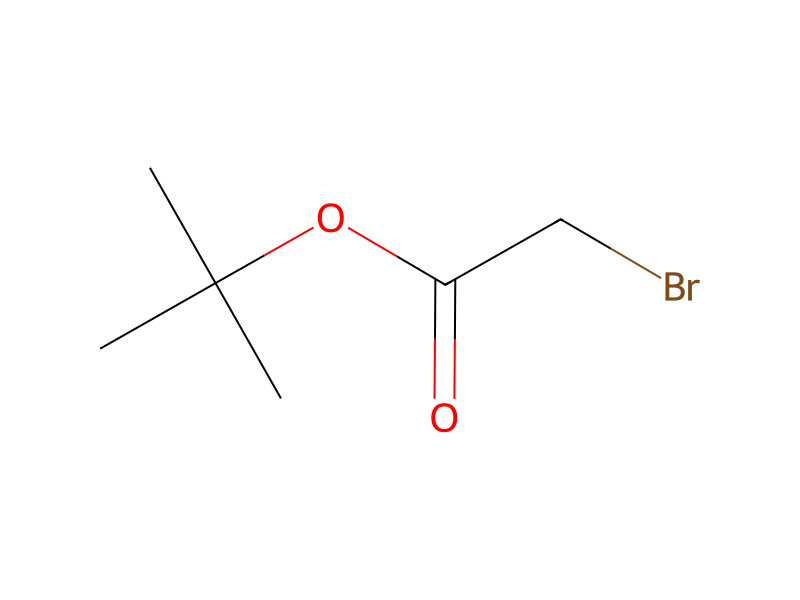
To a stirred solution of trans 3-azido-2-hydroxy-1,2,3,4-tetrahydronaphthalene (95 mg, 0.55 mmol) in tetrahydrofuran (5 mL) at 0° C. under nitrogen was added sodium hydride (60% oil dispersion, 26 mg, 0.66 mmol). Gas evolution was observed and the reaction mixture turned cloudy. After slowly warming up to room temperature for 20 min, t-butyl bromoacetate (0.12 mL, 0.83 mmol) was added. After 2 h, the reaction mixture was quenched by addition of saturated aqueous ammonium chloride solution and diluted with ethyl acetate. The organic layer was washed with aqueous ammonium chloride solution and brine, dried over anhydrous magnesium sulfate, and concentrated under vacuum to yield a residue. The residue was purified by silica gel chromatography (7% ethyl acetate in hexane was used) to obtain the title compound (90 mg). 13C NMR (400 MHz, CDCl3) δ 169.59, 133.18, 132.59, 128.88, 128.45, 126.50, 126.37, 81.76, 78.89, 67.99, 61.40, 33.95, 33.51, 28.08. 1H NMR (400 MHz, CDCl3) δ 7.03-7.17 (m, 4H), 4.20 (s, 2H), 3.91 (m, 1H), 3.73 (m, 1H), 3.29 (dd, J=5.7, 16.8 Hz, 1H), 3.16 (dd, J=5.7, 16.8 Hz, 1H), 2.90 (dd, J=8.4, 17.0 Hz, 1H), 2.80 (dd, J=8.4, 17.0 Hz, 1H), 1.48 (s, 9H).