Chloroacetyl chloride → 2-Chloro-N-(2-(2,6-dioxopiperidin-3-yl)-1,3-dioxoisoindolin-4-yl)acetamide
HRID 906730
Reaktionsgleichung

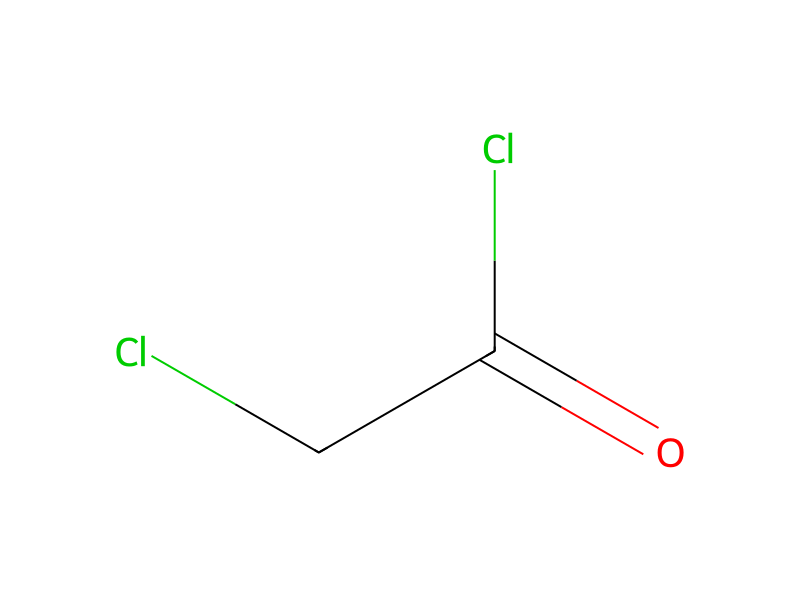
[NH2:1][C:2]1[CH:10]=[CH:9][CH:8]=[C:7]2[C:3]=1[C:4](=[O:20])[N:5]([CH:12]1[CH2:17][CH2:16][C:15](=[O:18])[NH:14][C:13]1=[O:19])[C:6]2=[O:11].[Cl:21][CH2:22][C:23](Cl)=[O:24]>C1COCC1>[O:19]=[C:13]1[CH:12]([N:5]2[C:4](=[O:20])[C:3]3[C:7](=[CH:8][CH:9]=[CH:10][C:2]=3[NH:1][C:23](=[O:24])[CH2:22][Cl:21])[C:6]2=[O:11])[CH2:17][CH2:16][C:15](=[O:18])[NH:14]1Komponenten
4
Edukt 2

Produkt 1

Reagenzien, Katalysatoren, Lösungsmittel 1

Versuchsvorschrift
To a stirred suspension of 4-amino-2-(2,6-dioxo(3-piperidyl))isoindoline-1,3-dione (1.37 g, 5.00 mmol) in THF (30 ml) was added chloroacetyl chloride-(0.62 g, 5.5 mmol). The mixture was heated to reflux for 30 minutes. The solvent was evaporated in vacuo and the resulting solid was slurried in diethyl ether (20 ml) and filtered to give 1.67 g (96%) of product as an off-white solid: 1H NMR (DMSO-d6) δ 11.18 (s, 1H), 10.31 (s, 1H), 8.54 (d, J=8.4 Hz, 1H), 7.88 (t, J=7.7 Hz, 1H), 7.68 (d, J=7.3 Hz, 1H), 5.17 (dd, J=5.2 and 12.7 Hz, 1H), 4.54 (s, 2H), 2.90-2.85 (m, 1H), 2.65-2.51 (m, 2H), 2.10-2.06 (m, 1H).