Reaktionsgleichung

[OH:1][C:2]1[CH:7]=[CH:6][C:5]([CH2:8][CH:9]=[O:10])=[CH:4][CH:3]=1.O[C:12]1C=CC(CCCO)=CC=1.C1C=CN=CC=1.O=S(=O)=O>CS(C)=O.C(Cl)Cl>[OH:1][C:2]1[CH:7]=[CH:6][C:5]([CH:8]([CH3:12])[CH:9]=[O:10])=[CH:4][CH:3]=1Komponenten





Versuchsvorschrift
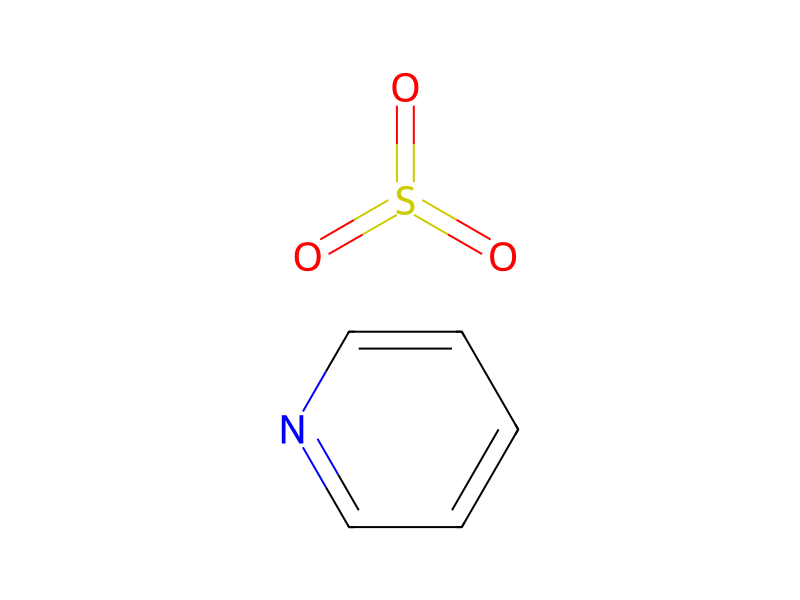
4-hydroxyphenylpropionaldehyde was prepared by a synthesis analogous to that for 4-hydroxyphenylacetaldehyde (Heterocycles, 2000, 53, 777-784). 3-(4-Hydroxyphenyl)-1-propanol (1.0 g, 6.6 mmol, Aldrich) was dissolved in dimethylsulfoxide (8 mL, Aldrich). TEA (2.0 mL, 14 mmol, Aldrich) was added slowly with stirring. Pyridine-sulfur trioxide (SO3.py) complex (2.3 g, 15 mmol, Aldrich) was completely dissolved in dimethylsulfoxide (9 mL, Aldrich) and this solution was added drop-wise to the alcohol, with vigorous stirring. After stirring for 1 h at room temperature, the reaction was diluted with CH2Cl2, then washed with ice-cold water. The organic layer was dried over Na2SO4, filtered, and concentrated to dryness. Purification using silica gel chromatography with hexane-ethyl acetate as eluent (5:1, then 2:1) yielded 745 mg (75%) of 4-hydroxyphenylpropionaldehyde.
Aufarbeitung
- stirringAfter stirring for 1 h at room temperature
- washwashed with ice-cold water
- dry with materialThe organic layer was dried over Na2SO4
- filtrationfiltered
- concentrationconcentrated to dryness
- customPurification
Quellen und Nachweise
- ORD-Eintrag
- ord-817036adac1e403bbe10ddb6d7fb1794
- Quelldatensatz
- uspto-grants-2011_09
- Patentnummer
- US08017733B2
Verknüpfte Notizen
Wird geladen…