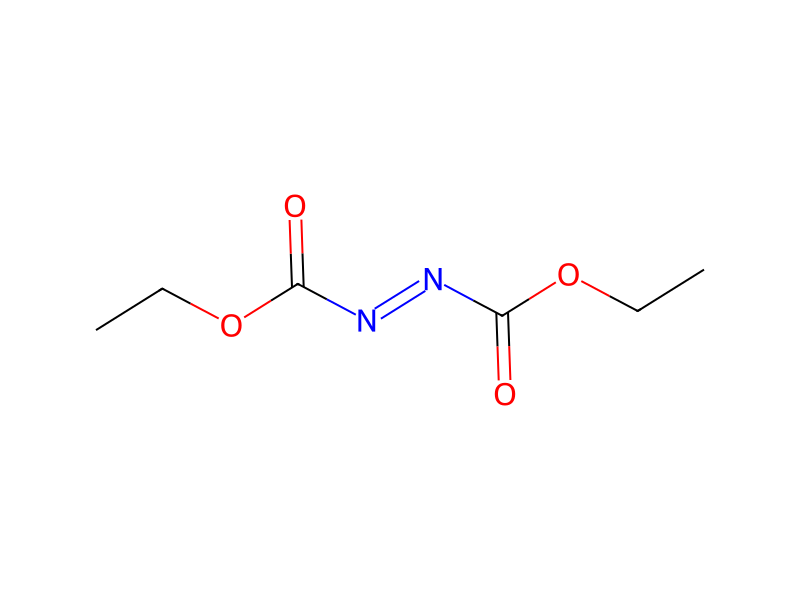
[C:1]([O:5][C:6](=[O:15])[NH:7][C@H:8]1[CH2:13][CH2:12][C@H:11](O)[CH2:10][CH2:9]1)([CH3:4])([CH3:3])[CH3:2].C1C=CC(P(C2C=CC=CC=2)C2C=CC=CC=2)=CC=1.N(C(OCC)=O)=NC(OCC)=O.C1(P([N:61]=[N+:62]=[N-:63])(C2C=CC=CC=2)=O)C=CC=CC=1>C1COCC1>[C:1]([O:5][C:6](=[O:15])[NH:7][C@H:8]1[CH2:13][CH2:12][C@@H:11]([N:61]=[N+:62]=[N-:63])[CH2:10][CH2:9]1)([CH3:4])([CH3:3])[CH3:2]To a cooled (−10° C.) and stirred solution under Ar of (trans-4-hydroxy-cyclohexyl)carbamic acid tert-butyl ester (10.0 g) (H. Noguchi, T. Aoyama, T. Shioiri, Heterocycles 2002, 58, 471-504) and PPh3 (18.3 g) in THF (250 ml) was added diethyl azodicarboxylate (12.1 g). After 5 min a solution of diphenylphosphoryl azide (19.2 g) in THF (250 ml) was slowly added from a dropping funnel. The reaction mixture was stirred 6 h at −10° C. and stirring was continued over night at RT. After dilution with Et2O the mixture was washed with H2O. The aqueous layer was washed with one more portion of Et2O. The combined organic layers were dried over Na2SO4 and the solvent was evaporated. Chromatography (silica, CH2Cl2 to CH2Cl2/5% MeOH) afforded 12.0 g (quant.) of product still contaminated by side products. This material was used as this in the following step. Light yellow semisolid.