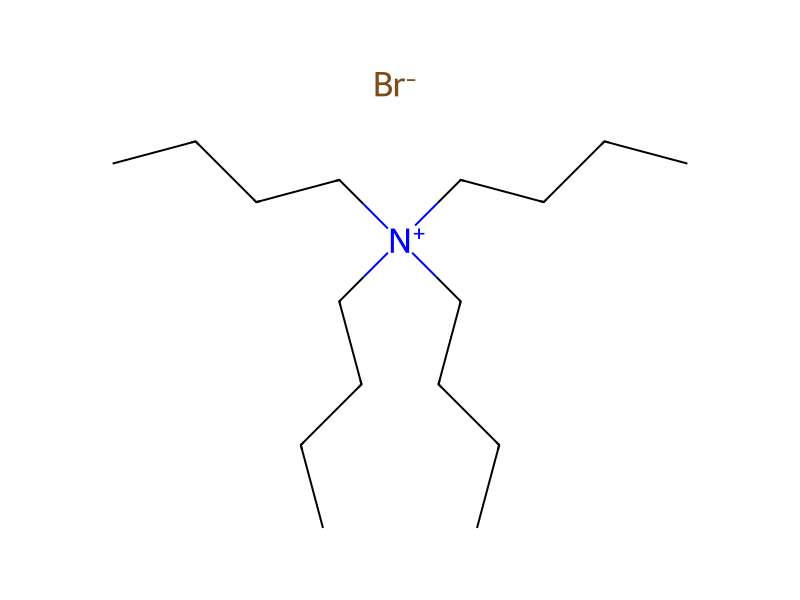
To a mixture of 2-(pyrimidin-5-yl)acetonitrile (104 mg, 0.873 mmol), dibromoethane (113 μL, 1.31 mmol) and tetrabutylammonium bromide (65 mg, 0.23 mmol) dissolved in toluene was added an aqueous solution of sodium hydroxide (50%, 500 mg in 0.5 mL of water, 12.5 mmol). The reaction mixture was stirred at room temperature for 16 h. The reaction mixture was diluted with ethyl acetate (2 mL), washed with water (0.5 mL×2) and brine (0.5 mL). The organics were dried over magnesium sulfate, filtered and concentrated under reduced pressure. The residue was purified via flash chromatography (0-80% ethyl acetate in heptanes) to afford 1-(pyrimidin-5-yl)cyclopropanecarbonitrile as a solid (28 mg, 22%). 1H NMR (500 MHz, CDCl3) δ 1.50-1.56 (m, 2H), 1.85-1.95 (m, 2H), 8.72 (s, 2H), 9.19 (s, 1H).