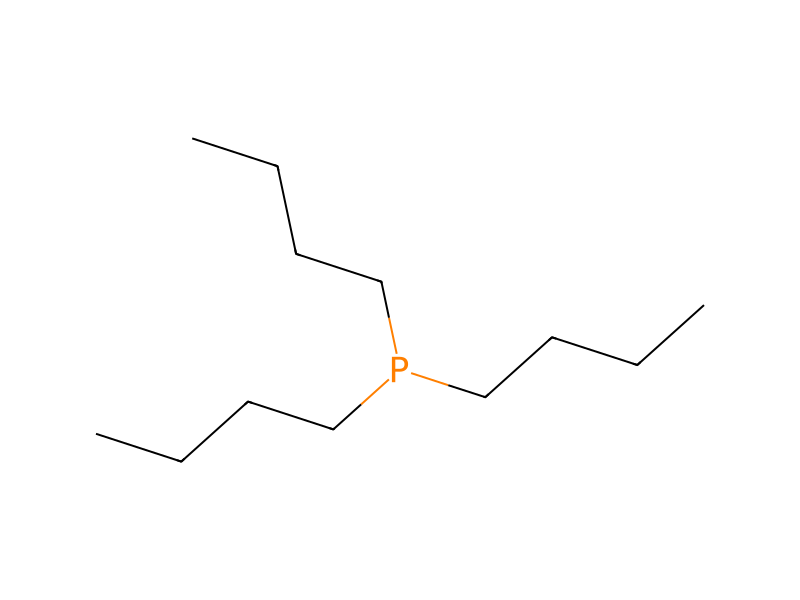
Tributylphosphine → Ethyl{2-methyl-4-[({5-[4-(trifluoromethyl)phenyl]-3-furyl}methyl)thio]phenoxy}acetate
HRID 9689
Reaktionsgleichung

[F:1][C:2]([F:17])([F:16])[C:3]1[CH:8]=[CH:7][C:6]([C:9]2[O:13][CH:12]=[C:11]([CH2:14]O)[CH:10]=2)=[CH:5][CH:4]=1.C(P(CCCC)CCCC)CCC.[CH2:31]([O:33][C:34](=[O:45])[CH2:35][O:36][C:37]1[CH:42]=[CH:41][C:40]([SH:43])=[CH:39][C:38]=1[CH3:44])[CH3:32]>O1CCCC1>[CH2:31]([O:33][C:34](=[O:45])[CH2:35][O:36][C:37]1[CH:42]=[CH:41][C:40]([S:43][CH2:14][C:11]2[CH:10]=[C:9]([C:6]3[CH:7]=[CH:8][C:3]([C:2]([F:17])([F:16])[F:1])=[CH:4][CH:5]=3)[O:13][CH:12]=2)=[CH:39][C:38]=1[CH3:44])[CH3:32]Komponenten
5