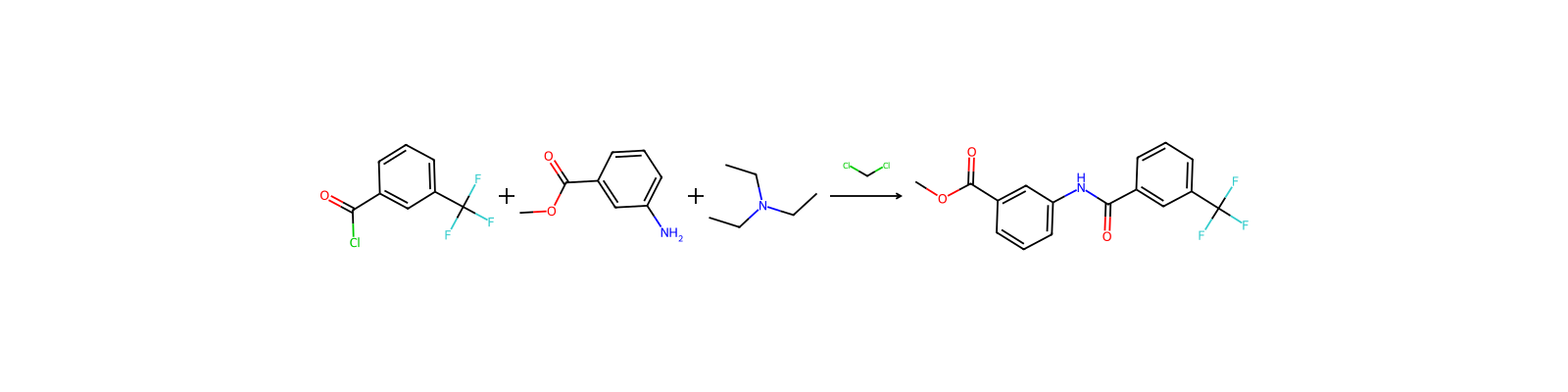
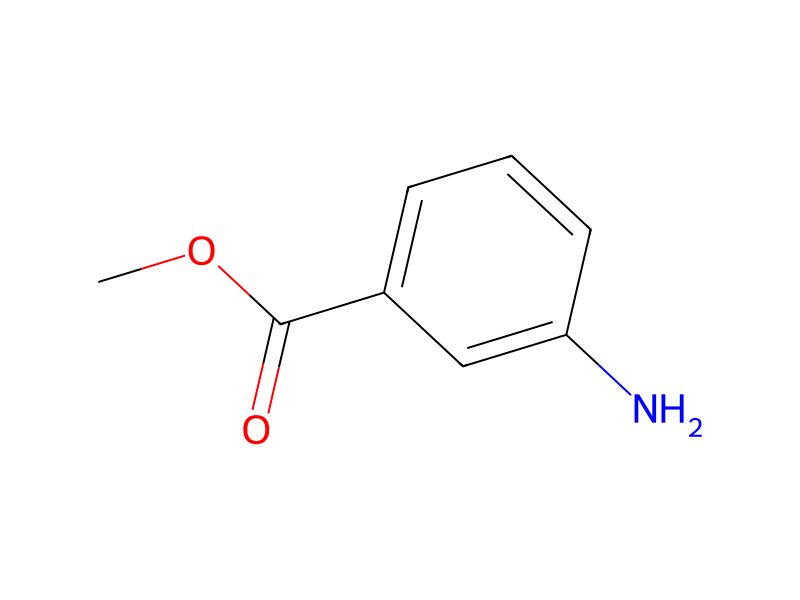
To a solution of 17.9 gm (86 mmol) of 3-trifluoromethylbenzoyl chloride in 70 mL of dichloromethane was added 10.0 gm (66 mmol) of methyl 3-aminobenzoate. Triethylamine (9.38 gm, 13 mL, 93 mmol) was then added slowly to the mixture. After the addition was complete, the solution was warmed to 45° C. and stirred overnight. Ice was added to the solution to quench excess benzoyl chloride. After one hour, the layers were separated. The organic fraction was washed with 5% aqueous hydrochloride acid, saturated sodium bicarbonate, and finally with saturated sodium chloride solution. The dichloromethane solution was dried over magnesium sulfate. The drying agent was filtered off, and the solvent was removed by rotoevaporation to give the desired methyl 3-(3-trifluoromethylbenzamido)benzoate. 1H NMR (CDCl3): δ3.92 (s. 3H), 7.52 (t, 1H), 7.74 (t, 1H), 7.80 (m, 1H), 7.92 (m, 1H), 7.96 (m, 1H), 8.21 (d, 1H), 8.26 (s, 1H), 8.43 (s, 1H), and 9.07 (br s, 1H). MS m/z: 324.0 (M+H).