2-Phenylethanol → Caffeic Acid Phenethyl Ester
HRID 976033
Reaktionsgleichung

[C:1]([OH:13])(=[O:12])/[CH:2]=[CH:3]/[C:4]1[CH:11]=[CH:10][C:8]([OH:9])=[C:6]([OH:7])[CH:5]=1.[C:14]1([CH2:20][CH2:21]O)[CH:19]=[CH:18][CH:17]=[CH:16][CH:15]=1.C1(C)C=CC(S(O)(=O)=O)=CC=1>C1C=CC=CC=1>[C:14]1([CH2:20][CH2:21][O:12][C:1](=[O:13])/[CH:2]=[CH:3]/[C:4]2[CH:11]=[CH:10][C:8]([OH:9])=[C:6]([OH:7])[CH:5]=2)[CH:19]=[CH:18][CH:17]=[CH:16][CH:15]=1Komponenten
5
Edukt 3
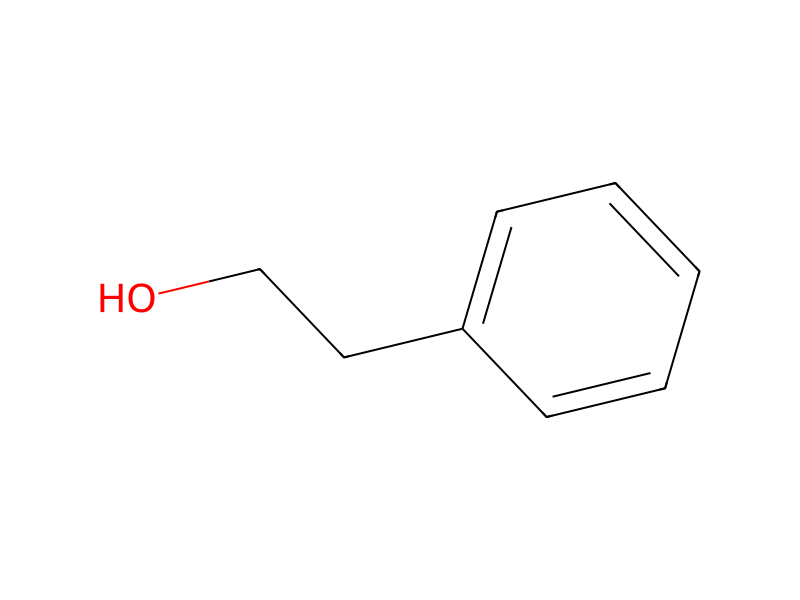


Produkt 1

Reagenzien, Katalysatoren, Lösungsmittel 1

Versuchsvorschrift
A solution of 1.80 g (10.0 mmol) of caffeic acid, 17.9 mL (150 mmol) of β-phenylethyl alcohol and 100 mg of p-toluenesulfonic acid in benzene (100 mL) were stirred overnight at reflux with a Dean Stark trap. Solvent and excess alcohol were removed by distillation and residue purified by silica gel chromatography (petroleum ether/CHCl3). Product was crystallized (ether/petroleum ether) to provide 67H-42-A as snow-white crystals, 1.0 g (35%): mp 128.0° C. 126°-128° C.) (Grunberger, D. et al., Experimentia, (1988) 44:230-2).