Ethanol → HCID 20159085, Verbindung
Reaktionsgleichung

C(O)C.[N+:4]([C:7]1[CH:12]=[CH:11][C:10]([N:13]=[C:14]=[O:15])=[CH:9][CH:8]=1)([O-:6])=[O:5].[CH2:16]([NH:19][C:20]1[CH:25]=[CH:24][C:23]([Cl:26])=[CH:22][CH:21]=1)[CH2:17][CH3:18]>C(#N)C>[N+:4]([C:7]1[CH:8]=[CH:9][C:10]([NH:13][C:14]([N:19]([C:20]2[CH:21]=[CH:22][C:23]([Cl:26])=[CH:24][CH:25]=2)[CH2:16][CH2:17][CH3:18])=[O:15])=[CH:11][CH:12]=1)([O-:6])=[O:5]Komponenten
Edukt 3

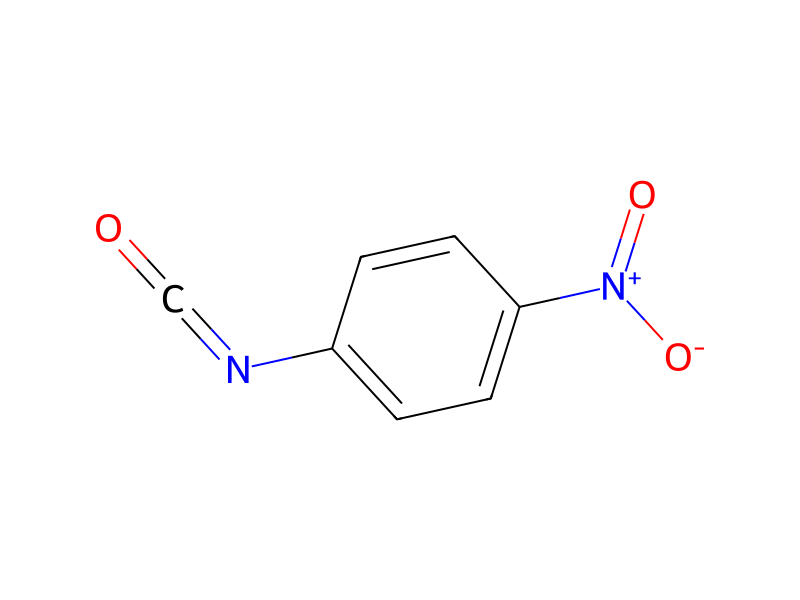

Produkt 1

Reagenzien, Katalysatoren, Lösungsmittel 1

Versuchsvorschrift
1.09 g of 2-chlorobenzoylisocyanate was added to a solution of 2.00 g of N-(4-aminophenyl)-N'-(4-chlorophenyl)-N'-propylurea in 50 ml of acetonitrile while stirring at room temperature. After stirring for 1.5 hours at room temperature the formed precipate was sucked off, washed with diethyl ether, and dried. According to PMR the product had the desired structure; the product melted at 170° C. The starting aniline was obtained from the corresponding nitro compound by reduction with hydrogen under the influence of Raney nickel as a catalyst; in this reaction ethanol was used as a solvent. N-(4-nitrophenyl)-N'-(4-chlorophenyl)-N'-propylurea was prepared by a coupling of p-nitrophenylisocyanate with N-propyl-4-chloroaniline in acetonitrile as a solvent. In a corresponding manner, in which, if desired, instead of acetonitrile diethyl ether was used as a solvent for the first-mentioned reaction, the following compounds were prepared; the compound numbers correspond again with the number given before in the specification:
Aufarbeitung
- customwas used as a solvent for the first-mentioned reaction
- customthe following compounds were prepared
Quellen und Nachweise
- ORD-Eintrag
- ord-8f4c9fd5af324d23b548b761c3f75095
- Quelldatensatz
- uspto-grants-1987_05
- Patentnummer
- US04665235
Notizen zur Reaktion
Wird geladen…